Encyclopedia › Human life in Bible times
Human life in Bible times
Widows, orphans and foreigners
Three without a family to protect them · gleanings, the third-year tithe, a cloak not taken in pledge
A widow, a fatherless child and a foreigner living in the land had no man of their own family to speak for them at the gate, and the Law names them together again and again: “You must not mistreat any widow or orphan” (Exodus 22:22). Their share was set aside in the farming year: a forgotten sheaf, the last olives and grapes “for the foreigner, the fatherless, and the widow” (Deuteronomy 24:19–21), and every third year a tithe stored in the towns (Deuteronomy 14:29). A widow’s cloak was not to be taken in pledge (Deuteronomy 24:17). Hammurabi too wrote that he set up his laws so that the strong might not oppress the weak, and to give justice to the orphan and the widow.
The widow of Zarephath had “only a handful of flour in a jar and a little oil in a jug” (1 Kings 17:12), and a prophet’s widow was about to lose her two sons to a creditor (2 Kings 4:1). At Nain Jesus met a funeral: the dead man was “the only son of his mother, and she was a widow”; He had compassion on her, raised the young man and “gave him back to his mother” (Luke 7:12–15). The first church in Jerusalem shared out food to its widows every day (Acts 6:1).
In art
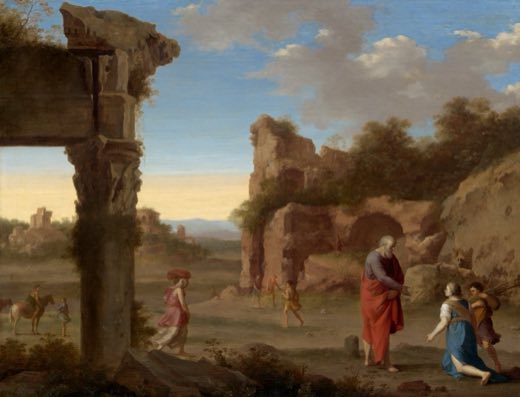 The Prophet Elijah and the Widow of ZarephathCornelis van Poelenburch
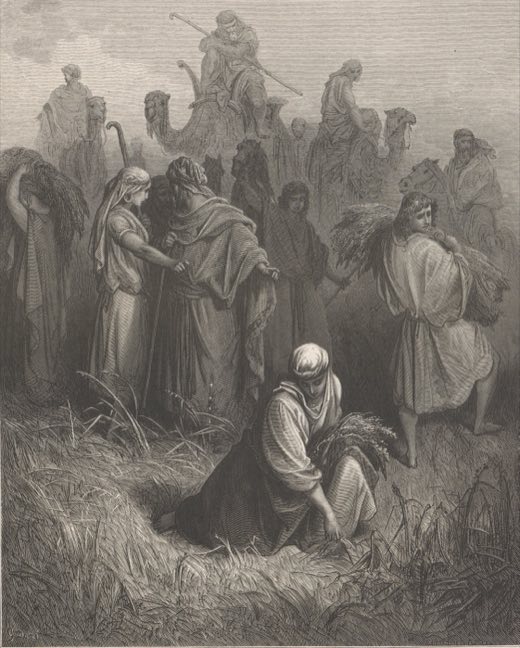 Ruth Gleans in the Field of BoazGustave Doré
All verses on this topic
See also
- Levirate marriageHuman life in Bible times
- Debts, loans and pledgesHuman life in Bible times
- The kinsman-redeemer (go’el)Human life in Bible times
- Elders and judges: going to lawHuman life in Bible times
- Sickles and sheavesWork and trades
- Gleaning: the edges of the field for the poorField, orchard and water
- Tearing one’s clothes and widow’s garmentsClothing and adornment
- Justice and mercyVirtues
- The Seven and the first deaconsJewish groups and the Roman world
- Rich and poorHuman life in Bible times
- NaomiPeople
- RuthPeople
- ZarephathPlaces
- NainPlaces
Sources: Tyndale Open Bible Dictionary © 2023 Tyndale House Publishers, CC BY-SA 4.0 — adapted and shortened; the original work is available for free at tyndaleopenresources.com · Sources and rights