Encyclopedia › Jewish groups and the Roman world
Jewish groups and the Roman world
The Seven and the first deacons
Acts 6 · Stephen, Philip and five others · Greek diakonos, “servant” · overseers and deacons
When the Greek-speaking widows were neglected in the daily distribution, the Twelve said that they should not leave the word of God “to wait on tables” and asked the church to “select from among you seven men confirmed to be full of the Spirit and wisdom” (Acts 6:2–3). The church chose “Stephen, a man full of faith and of the Holy Spirit, as well as Philip, Prochorus, Nicanor, Timon, Parmenas, and Nicolas from Antioch, a convert to Judaism”, and the apostles “prayed and laid their hands on them” (Acts 6:5–6). Two of them are known for more than serving: Stephen spoke boldly in the synagogues and became the first martyr, and Philip preached in Samaria and baptized the Ethiopian official; Acts later calls him “Philip the evangelist” (Acts 21:8).
Luke uses the Greek words diakonia, “service”, and diakonein, “to serve”, but never calls the Seven deacons. Paul writes to Philippi “together with the overseers and deacons” (Philippians 1:1), and First Timothy sets out what is required of deacons: “Deacons likewise must be dignified, not double-tongued or given to much wine or greedy for money” (1 Timothy 3:8). From the 2nd century Irenaeus and others saw in the Seven the first deacons, and most churches still read Acts 6 that way; some scholars think the Seven were leaders of the Greek-speaking believers rather than helpers.
In art
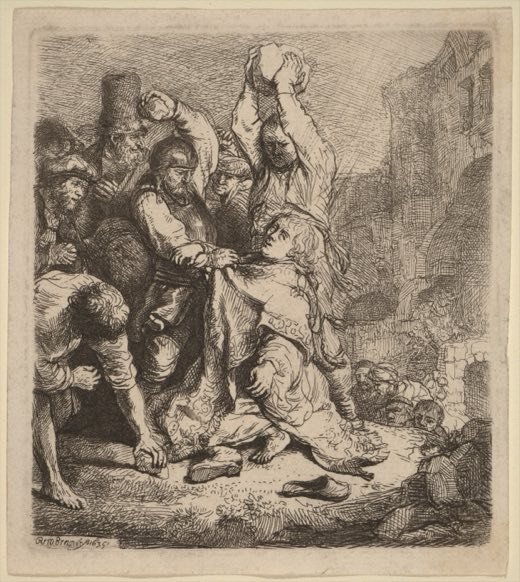 The Stoning of Saint Stephen
See also
- Hebrews and HellenistsJewish groups and the Roman world
- Elders and overseers in the first churchesJewish groups and the Roman world
- Widows, orphans and foreignersHuman life in Bible times
- Proselytes and God-fearersJewish groups and the Roman world
- StephenPeople
- Philip (Acts)People
- NicolasPeople
Sources: Tyndale Open Bible Dictionary © 2023 Tyndale House Publishers, CC BY-SA 4.0 — adapted and shortened; the original work is available for free at tyndaleopenresources.com · Sources and rights