Encyclopedia › Human life in Bible times
Human life in Bible times
Adoption and foster children
Moses, Genubath, Esther · Ephraim and Manasseh counted as Jacob’s · adoption in Rome
The Law of Moses has no rules on adoption, but the stories know it. Pharaoh’s daughter took the Hebrew baby from the river, and when he was older “he became her son. She named him Moses” (Exodus 2:10). Genubath, son of an Edomite prince, grew up “among the sons of Pharaoh” (1 Kings 11:20), and Mordecai brought up his orphaned cousin Esther and “had taken her in as his own daughter” (Esther 2:7). Old Jacob made Joseph’s two sons his own: “Ephraim and Manasseh shall be mine, just as Reuben and Simeon are mine” (Genesis 48:5).
Childless Abram expected a servant to inherit: “a servant in my household will be my heir” (Genesis 15:3). Clay tablets of the 15th century BC from Nuzi in northern Mesopotamia record a couple adopting a man who would care for them and inherit, and a wife giving her slave woman to bear children; by one view they explain Abram’s words and Rachel’s, “that she may bear children for me” (Genesis 30:3), by another the likeness is looser than once thought. In Rome adoption was a common legal act: Julius Caesar adopted Octavian, the later Augustus, in his will, and Augustus adopted Tiberius.
In art
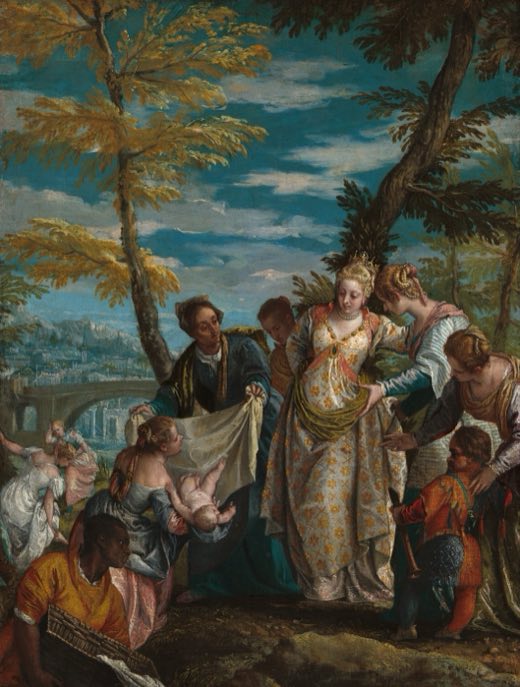 The Finding of Moses
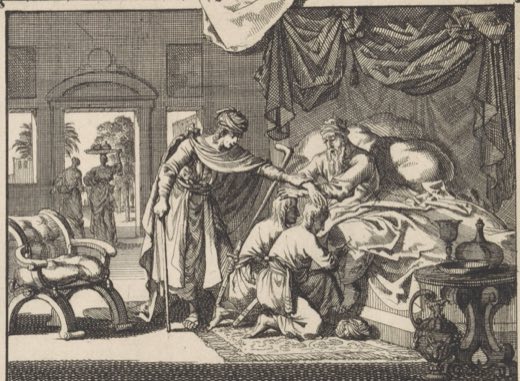 Jacob Blesses Ephraim and Manasseh
See also
- InheritanceHome and family
- ChildrenHome and family
- AugustusRulers around the Bible
- TiberiusRulers around the Bible
- Blessings and last wordsHuman life in Bible times
- MosesPeople
- EstherPeople
- MordecaiPeople
Sources: Tyndale Open Bible Dictionary © 2023 Tyndale House Publishers, CC BY-SA 4.0 — adapted and shortened; the original work is available for free at tyndaleopenresources.com · Sources and rights