Encyclopedia › Human life in Bible times
Human life in Bible times
Elders and judges: going to law
Hebrew shofet (judge), zaqen (elder) · cases heard at the gate · hard cases sent higher
Most quarrels were settled close to home. The elders of a town, the heads of its families, sat in the gate to hear cases, and the Law also told Israel to “appoint judges and officials for your tribes in every town” (Deuteronomy 16:18). Jethro advised Moses to choose able men who would judge “all minor cases … on their own” and bring him only the major ones (Exodus 18:22). A case too hard for a town went up to the priests and the judge at the central sanctuary (Deuteronomy 17:8–9).
The king was the highest judge. Absalom stood by the road to the gate and won hearts by telling those with a lawsuit, “If only someone would appoint me judge in the land” (2 Samuel 15:4), and Solomon’s famous judgment began when two women “came to the king and stood before him” (1 Kings 3:16). Jehoshaphat set judges in the towns of Judah and told them, “Consider carefully what you do” (2 Chronicles 19:6). There were no lawyers; the great danger was the bribe, which “blinds those who see” (Exodus 23:8). The prophets demanded, “establish justice in the gate” (Amos 5:15).
In art
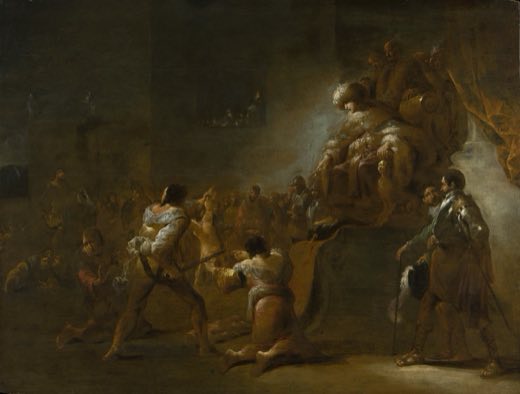 The Judgment of Solomon
All verses on this topic
See also
- The city gateBuildings and structures
- The SanhedrinJewish groups and the Roman world
- The governor’s court and the appeal to CaesarJewish groups and the Roman world
- Witnesses and oathsHuman life in Bible times
- Old ageHuman life in Bible times
- Widows, orphans and foreignersHuman life in Bible times
- Cities of refugeHuman life in Bible times
- Damages and restitutionHuman life in Bible times
- The laws of HammurabiAncient texts beside the Bible
- Bribery and unjust judgesThe seven deadly sins
- Laws older than Hammurabi: Ur-Nammu and EshnunnaAncient texts beside the Bible
- Elders and overseers in the first churchesJewish groups and the Roman world
- JethroPeople
- AbsalomPeople
- JehoshaphatPeople
Sources: Tyndale Open Bible Dictionary © 2023 Tyndale House Publishers, CC BY-SA 4.0 — adapted and shortened; the original work is available for free at tyndaleopenresources.com · Sources and rights