Encyclopedia › Human life in Bible times
Human life in Bible times
Rich and poor
“There will never cease to be poor” · land joined to land · the rich man and Lazarus
When Israel settled the land, each family was meant to have its own field, but over the centuries debt, drought and war pushed many off it. The Law did not pretend poverty would end — “there will never cease to be poor in the land” — and so commanded, “open wide your hand to your brother and to the poor and needy” (Deuteronomy 15:11). Gleaning, the tithe for the poor every third year, loans without interest and the release of debts were meant to keep people from falling too far. Judges were to favor neither side: “you must not show partiality to the poor or favoritism to the rich” (Leviticus 19:15).
The prophets of the eighth century BC, a time of wealth for some, describe what happened instead. Isaiah cried, “Woe to you who add house to house and join field to field” (Isaiah 5:8). Amos called the rich women of Samaria “cows of Bashan… who oppress the poor and crush the needy” and accused merchants who would “buy the poor with silver and the needy for a pair of sandals” (Amos 4:1; 8:6); excavated houses at Tirzah show the gap growing between large and small homes in this period. Proverbs reminds both, “The LORD is Maker of them all” (Proverbs 22:2). Jesus told of a rich man “dressed in purple and fine linen” and a beggar named Lazarus at his gate (Luke 16:19–20), and James rebuked a church that gave the man with the gold ring the best seat (James 2:2–3).
In art
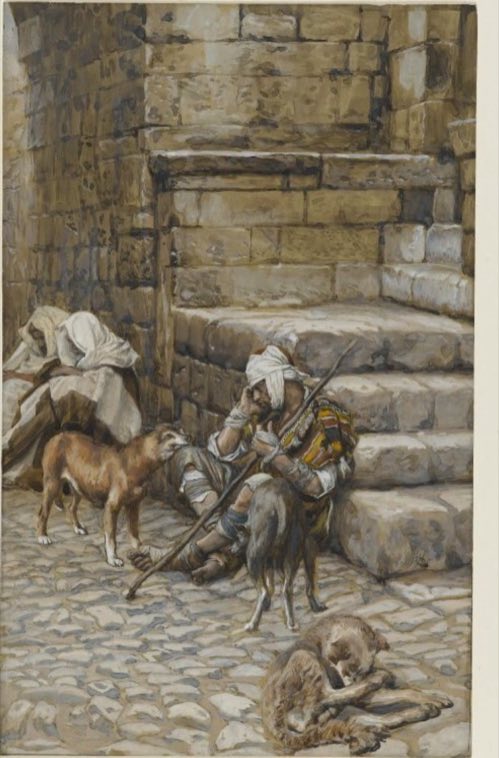 The Poor Lazarus at the Rich Man's Door (Le pauvre Lazare à la porte du riche)
See also
- Gleaning: the edges of the field for the poorField, orchard and water
- Debts, loans and pledgesHuman life in Bible times
- Widows, orphans and foreignersHuman life in Bible times
- Loans, pledges and interestTrade, craft and color
- The blind and the lame in daily lifeHuman life in Bible times
- Prophetesses, a judge and queensHuman life in Bible times
- GenerosityVirtues
- Lazarus (Luke)People
Sources: Tyndale Open Bible Dictionary © 2023 Tyndale House Publishers, CC BY-SA 4.0 — adapted and shortened; the original work is available for free at tyndaleopenresources.com · Sources and rights