Encyclopedia › Human life in Bible times
Human life in Bible times
The firstborn: birthright and redemption
Hebrew bekor, “firstborn” · a double portion · redeemed for five shekels
The first son born to a father was his bekor, and he had a special place. The law gave him “a double portion of all that he has”, even if his mother was the less loved of two wives: “the right of the firstborn belongs to him” (Deuteronomy 21:15–17). Yet the Bible’s stories again and again pass the eldest by. Esau sold his birthright to Jacob for “bread and lentil stew” (Genesis 25:34); Reuben lost his because he “defiled his father’s bed”, and it went to the sons of Joseph (1 Chronicles 5:1); old Jacob crossed his hands and put his right hand on Ephraim, “the younger” (Genesis 48:14). David and Solomon were both younger sons.
After the last plague in Egypt every firstborn of Israel belonged to God: “Consecrate to Me every firstborn male… both of man and beast” (Exodus 13:2). Animals fit for sacrifice were offered; a firstborn donkey was redeemed with a lamb, “and every firstborn of your sons you must redeem” (Exodus 13:13). The Levites were taken in place of the firstborn, and the 273 firstborn more than the Levites were bought back at five shekels each (Numbers 3:46–47). That became the price for every firstborn son at a month old, “five shekels of silver, according to the sanctuary shekel” (Numbers 18:16). Mary and Joseph brought Jesus to the temple to present Him, because “Every firstborn male shall be consecrated to the Lord” (Luke 2:23). Jews still keep the redemption of the firstborn, pidyon ha-ben, a month after birth.
In art
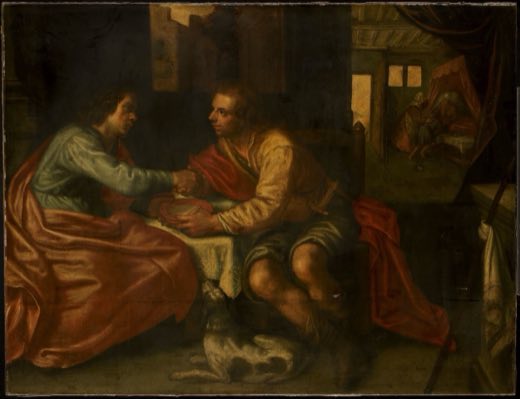 Esau Selling his BirthrightAfter Paulus Moreelse
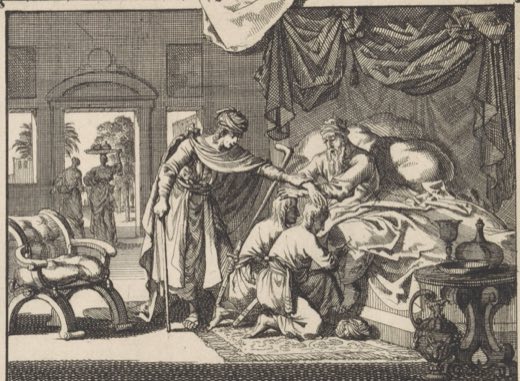 Jacob Blesses Ephraim and ManassehJan Luyken
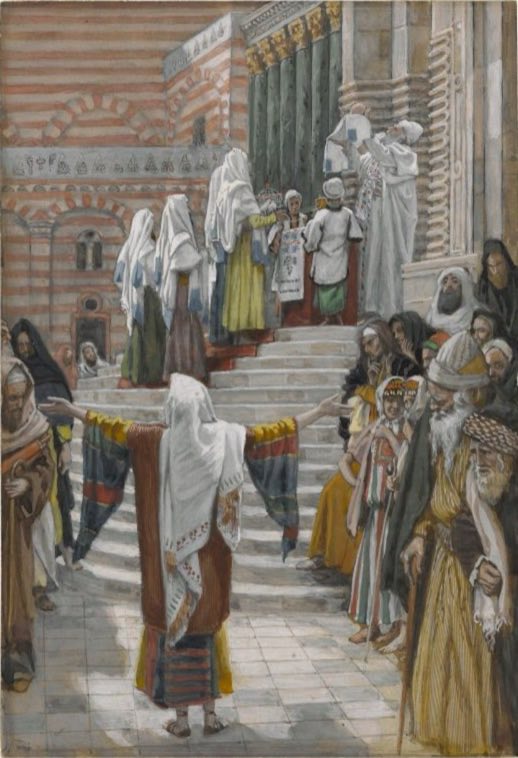 The Presentation of Jesus in the Temple (La présentation de Jésus au Temple)James Tissot
See also
- InheritanceHome and family
- Offerings after birth, healing and deathTabernacle and temple
- Vows and redemption pricesMoney and measures
- Circumcision on the eighth dayHuman life in Bible times
- More than one wifeHuman life in Bible times
- EsauPeople
- ReubenPeople
Sources: Tyndale Open Bible Dictionary © 2023 Tyndale House Publishers, CC BY-SA 4.0 — adapted and shortened; the original work is available for free at tyndaleopenresources.com · Sources and rights