Encyclopedia › Languages of the Bible
Languages of the Bible
Interpreters and translators
Joseph’s interpreter · letters “in Aramaic and then translated” · the Targums
Where languages met, someone had to translate. Joseph spoke to his brothers through an official, so “they did not realize that Joseph understood them, since there was an interpreter between them” (Genesis 42:23). Royal courts had their translators: a letter to Artaxerxes “was written in Aramaic and then translated” (Ezra 4:7). When the envoy of Assyria shouted to Jerusalem’s walls in Hebrew, the king’s officials begged him to use Aramaic, the language of diplomacy, so that the people would not understand (2 Kings 18:26).
After the exile many Jews spoke Aramaic better than Hebrew. When Ezra read the Law, the Levites helped the people understand it (Nehemiah 8:8), and in the synagogues it became the custom for a translator to give the reading in Aramaic, verse by verse; the Mishnah has rules for him. These spoken translations, written down, are the Targums; a Targum of Job was found at Qumran. In the church at Corinth Paul applied the same rule to speaking in tongues: “someone must interpret”, and “if there is no interpreter, he should remain silent in the church” (1 Corinthians 14:27–28). Paul himself spoke Greek to the Roman commander and then addressed the crowd “in Hebrew” (Acts 21:40), that is, in the language of the land.
In art
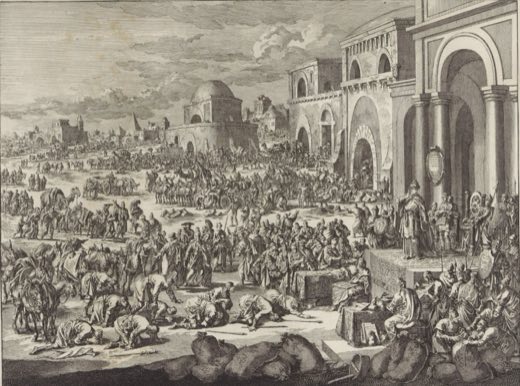 Joseph Sells Grain to His Brothers
See also
- Aramaic in the Old TestamentLanguages of the Bible
- Reading aloudWriting and books
- The languages of Israel’s neighborsLanguages of the Bible
- Pentecost and the gift of tonguesLanguages of the Bible
- The SeptuagintHow the Bible came to be
- The Vulgate and other ancient versionsHow the Bible came to be
- How a translation is made todayHow the Bible was translated around the world
- The Targums: the Bible in AramaicHow the Bible was translated around the world
- JosephPeople
Sources: Tyndale Open Bible Dictionary © 2023 Tyndale House Publishers, CC BY-SA 4.0 — adapted and shortened; the original work is available for free at tyndaleopenresources.com · Sources and rights