Encyclopedia › Languages of the Bible
Languages of the Bible
The languages of Israel’s neighbors
Moabite and Phoenician close to Hebrew · Egyptian and Akkadian far · Lycaonian at Lystra
Some neighbors spoke almost the same language as Israel. Phoenician, Moabite, Ammonite and Edomite were Canaanite languages like Hebrew; the inscription of King Mesha of Moab can be read by anyone who knows biblical Hebrew. The Philistines came from the Aegean world, and their first language is unknown; in Canaan they came to write a local Semitic tongue. In Nehemiah’s day “half of their children spoke the language of Ashdod or of the other peoples” (Nehemiah 13:24).
The great empires spoke languages the ordinary Israelite did not understand. Egypt is remembered as “a people of foreign tongue” (Psalm 114:1). Assyria and Babylon spoke Akkadian, and the prophets warned of an invader, “a nation whose language you do not know and whose speech you do not understand” (Jeremiah 5:15); to Isaiah such speech sounded like stammering (Isaiah 33:19). Young men taken to Babylon had to learn “the language and literature of the Chaldeans” (Daniel 1:4). In the New Testament world Greek was spoken everywhere, yet local languages lived on: at Lystra the crowd shouted “in the Lycaonian language” that the gods had come down (Acts 14:11), and the Roman commander in Jerusalem was surprised that Paul spoke Greek: “Do you speak Greek?” (Acts 21:37).
In art
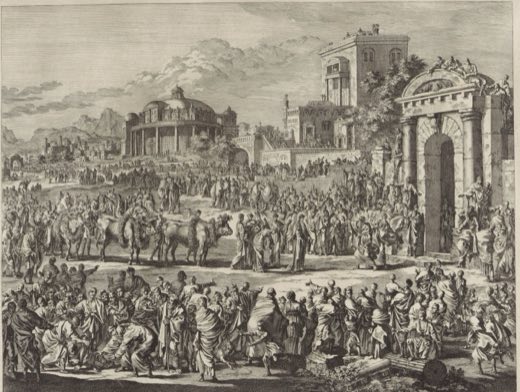 Paul and Barnabas at Lystra
See also
- Biblical HebrewLanguages of the Bible
- Moabite Stone (Mesha Stele)The Bible in stone
- PhilistinesPeoples and gods around Israel
- PhoeniciansPeoples and gods around Israel
- Koine: the common GreekThe Greek world of Paul
- Zeus and Hermes at LystraPeoples and gods around Israel
- Interpreters and translatorsLanguages of the Bible
- The table of nationsPeoples and gods around Israel
- LystraPlaces
Sources: Tyndale Open Bible Dictionary © 2023 Tyndale House Publishers, CC BY-SA 4.0 — adapted and shortened; the original work is available for free at tyndaleopenresources.com · Sources and rights