Encyclopedia › Languages of the Bible
Languages of the Bible
Pentecost and the gift of tongues
Acts 2 · “each of us hears them in his own native language” · tongues in Corinth
At the Feast of Weeks, fifty days after Passover, the disciples were together in Jerusalem when a sound like a rushing wind filled the house and tongues like fire rested on them. “They were all filled with the Holy Spirit and began to speak in other tongues as the Spirit enabled them” (Acts 2:4). Jerusalem was full of pilgrims from the whole Jewish world, and “each one heard them speaking his own language” (Acts 2:6). They asked, “Are not all these men who are speaking Galileans? How is it then that each of us hears them in his own native language?” (Acts 2:7–8). Luke lists the lands they came from, from Parthia and Mesopotamia to Rome, Crete and Arabia: “we hear them declaring the wonders of God in our own tongues!” (Acts 2:11). Others mocked: “They are drunk on new wine!” (Acts 2:13).
Christian writers since early times have seen Pentecost as the answer to Babel: there one language was confused, here many languages heard one message. Paul’s first letter to the Corinthians speaks of “speaking in various tongues” and “the interpretation of tongues” as gifts of the Spirit (1 Corinthians 12:10), and of one who “does not speak to men, but to God” (1 Corinthians 14:2). He asks that it be done in order, with an interpreter, and sets love above every gift: “If I speak in the tongues of men and of angels, but have not love, I am only a ringing gong” (1 Corinthians 13:1).
In art
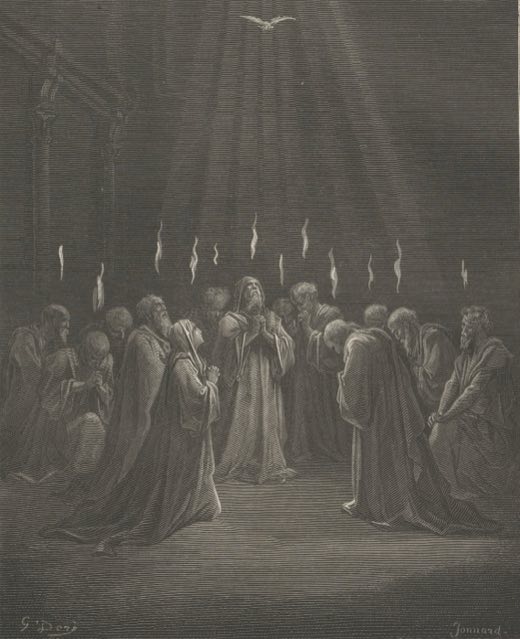 The Descent of the Holy Spirit
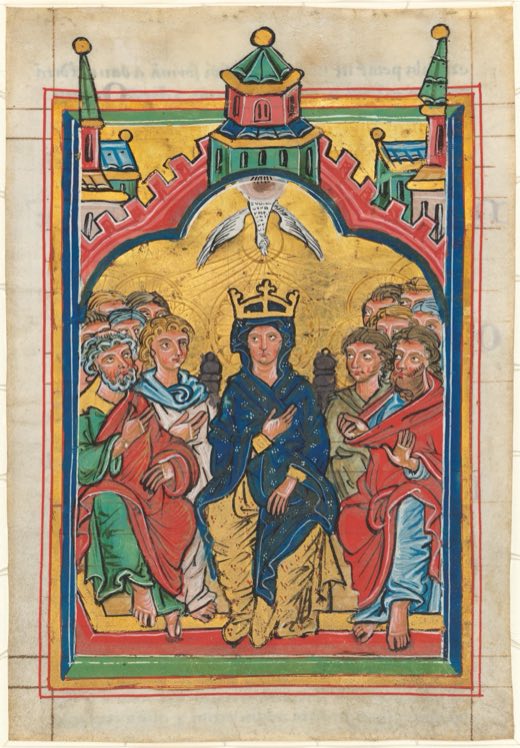 Pentecost
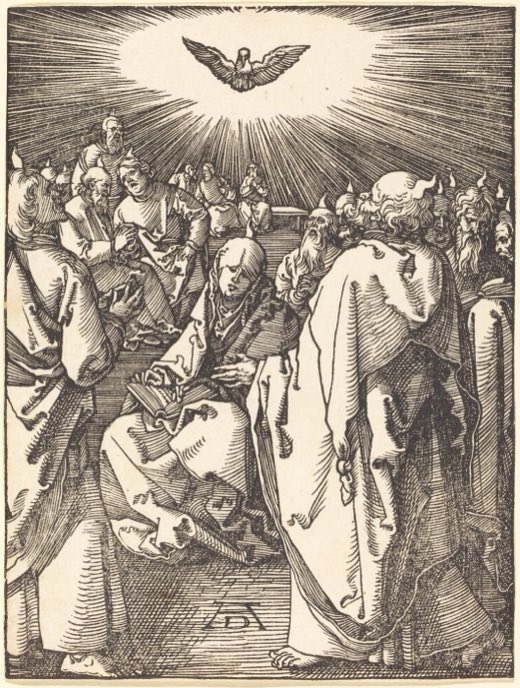 Pentecost
See also
- Feast of WeeksFeasts and festivals
- Babel and the many languagesLanguages of the Bible
- Interpreters and translatorsLanguages of the Bible
- Going up to JerusalemRoads and travel
- Love: 1 Corinthians 13Virtues
- Jews abroad: the DiasporaJewish groups and the Roman world
- Elamites, Medes and ParthiansPeoples and gods around Israel
Sources: Tyndale Open Bible Dictionary © 2023 Tyndale House Publishers, CC BY-SA 4.0 — adapted and shortened; the original work is available for free at tyndaleopenresources.com · Sources and rights