Encyclopedia › Languages of the Bible
Languages of the Bible
The name of God: YHWH, the LORD, I AM
Four letters, YHWH · read Adonai, “Lord” · printed LORD · El, Elohim, El Shaddai
The God of Israel has a personal name, written with four Hebrew letters, YHWH. When Moses asked what His name was, God answered, “I AM WHO I AM. This is what you are to say to the Israelites: ‘I AM has sent me to you’” (Exodus 3:14), and then, “This is My name forever” (Exodus 3:15). The name is linked with the Hebrew verb hayah, “to be”. It occurs nearly 6,800 times in the Old Testament. From about the 3rd century BC Jews, out of reverence, stopped saying it aloud and read Adonai, “Lord”, instead; the Greek translators wrote Kyrios, “Lord”. Many English Bibles, the BSB among them, print it “LORD” in small capitals. How it was pronounced is not certain; scholars usually reconstruct “Yahweh”, and the older form “Jehovah” joins its letters to the vowels of Adonai.
Other words name God too. El and Elohim mean “God”; Elohim is plural in form but takes a singular verb. God appeared to Abraham as El Shaddai, “God Almighty” (Genesis 17:1), and Melchizedek blessed Abram by El Elyon, “God Most High” (Genesis 14:19). The prophets often say “the LORD of Hosts” — the heavenly armies — as in Isaiah’s vision: “Holy, holy, holy is the LORD of Hosts” (Isaiah 6:3); Paul and James keep its Hebrew word in Greek, Sabaoth. Jesus’ words “before Abraham was born, I am!” (John 8:58) echo the name given to Moses.
In art
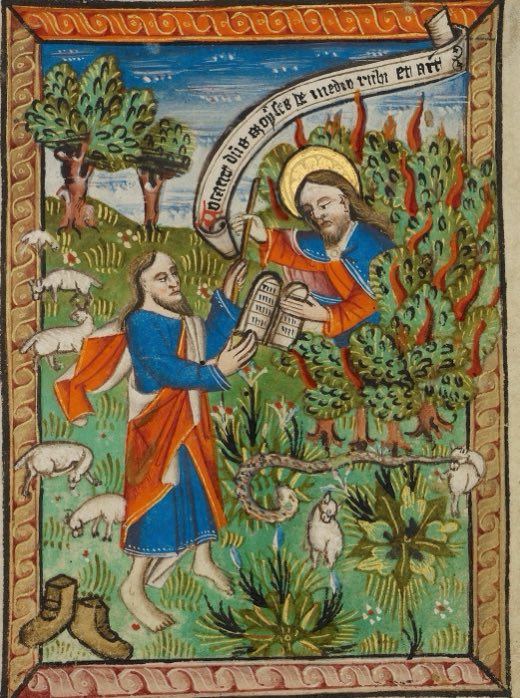 The Burning Bush (Ms. 101, fol. 13, from the Illustrated Vita Christi, with devotional supplements)Unknown English painter
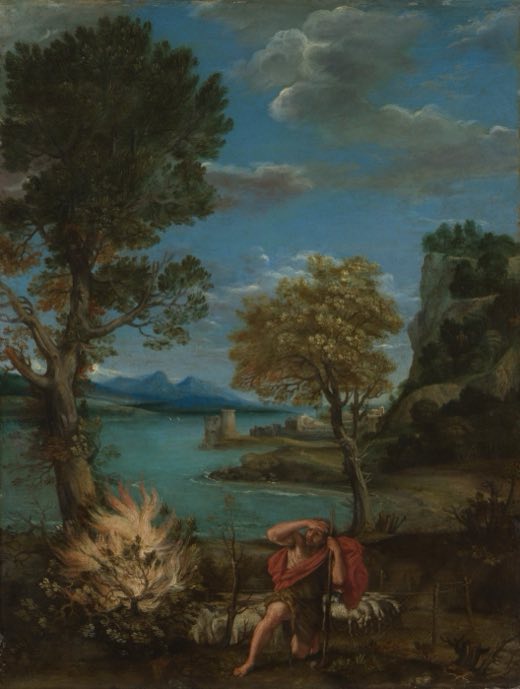 Landscape with Moses and the Burning BushDomenichino
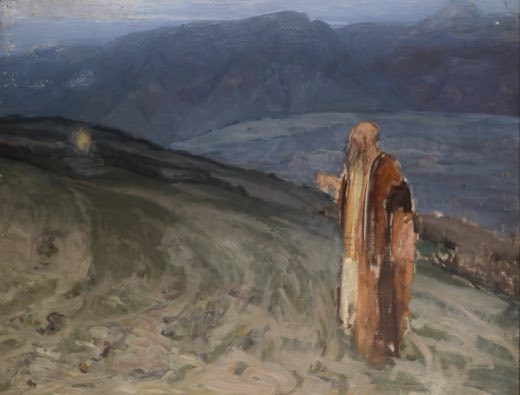 Study for Moses and the Burning BushHenry Ossawa Tanner
See also
- Names with God’s name in themHuman life in Bible times
- Consonants and vowel pointsLanguages of the Bible
- The SeptuagintHow the Bible came to be
- Hebrew words in every languageLanguages of the Bible
- Messiah and Christ: the Anointed OneLanguages of the Bible
- MosesPeople
Sources: Tyndale Open Bible Dictionary © 2023 Tyndale House Publishers, CC BY-SA 4.0 — adapted and shortened; the original work is available for free at tyndaleopenresources.com · Sources and rights