Encyclopedia › Human life in Bible times
Human life in Bible times
Prophetesses, a judge and queens
Miriam, Deborah, Huldah, Anna · the queen mother · Athaliah, who ruled alone
In a world where men held most offices, the Bible names a number of women who spoke and ruled. Miriam is called “the prophetess” as she leads the women with tambourines after the crossing of the sea (Exodus 15:20). “Deborah, a prophetess… was judging Israel at that time”; people came to her under her palm tree, and she summoned Barak to war (Judges 4:4). When the scroll of the Law was found in the temple, King Josiah’s officials went to “Huldah the prophetess” in Jerusalem, and her word decided what the king did (2 Kings 22:14). Nehemiah names a prophetess, Noadiah, among those who tried to frighten him (Nehemiah 6:14). In the Gospels the aged Anna, “a prophetess… of the tribe of Asher”, spoke of the child Jesus in the temple (Luke 2:36), and Philip the evangelist had “four unmarried daughters who prophesied” (Acts 21:9).
At court the king’s mother had a place of her own. When Bathsheba came to Solomon, “the king stood up to greet her, bowed to her”, and had a throne set for her at his right hand (1 Kings 2:19). Kings records the name of nearly every king of Judah’s mother, and Asa removed his grandmother Maacah “from her position as queen mother” (1 Kings 15:13). One woman ruled Judah alone: Athaliah seized the throne and reigned six years (2 Kings 11:3). Jezebel held great power at Ahab’s court, and the queen of Sheba and Candace, “queen of the Ethiopians” (Acts 8:27), appear as rulers in their own right.
In art
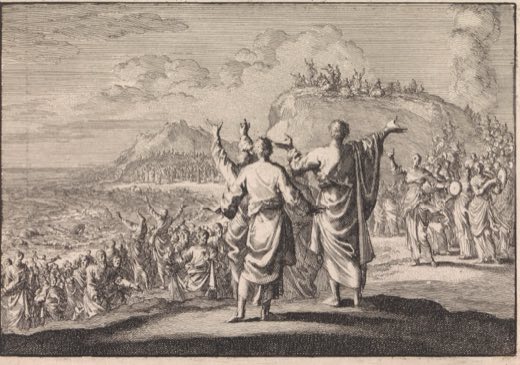 Miriam’s Song by the SeaJan Luyken
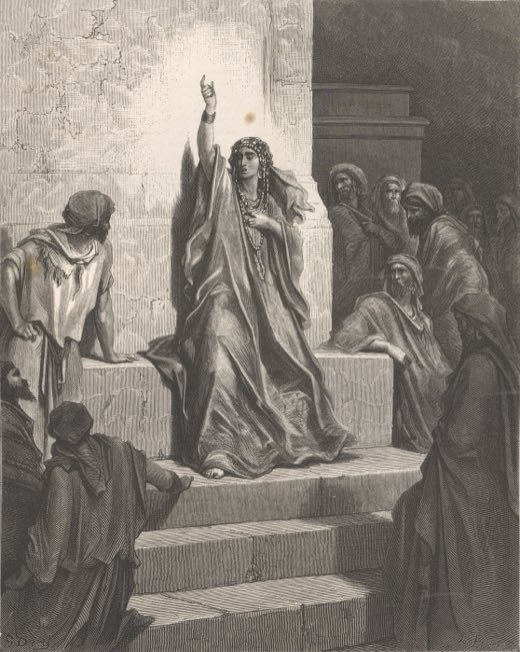 Deborah's Song of PraiseGustave Doré
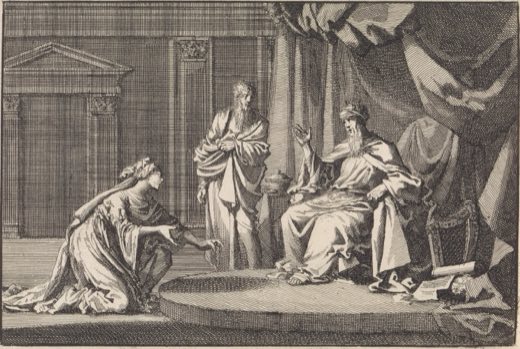 Bathsheba Bows before King DavidJan Luyken
See also
- The women who followed JesusJewish groups and the Roman world
- Women of the Greek cities: Lydia, Phoebe, DamarisThe Greek world of Paul
- A woman’s work at homeHome and family
- The blind and the lame in daily lifeHuman life in Bible times
- Rich and poorHuman life in Bible times
- Miriam, daughter of AmramPeople
- Deborah (Judges)People
- HuldahPeople
- BathshebaPeople
- Athaliah (2 Chronicles)People
- AnnaPeople
Sources: Tyndale Open Bible Dictionary © 2023 Tyndale House Publishers, CC BY-SA 4.0 — adapted and shortened; the original work is available for free at tyndaleopenresources.com · Sources and rights