Encyclopedia › Human life in Bible times
Human life in Bible times
The blind and the lame in daily life
No stumbling block before the blind · priests with a defect · Mephibosheth at the king’s table
People who could not see, hear or walk were part of every town in the Bible, and many lived by begging at a gate. A man “lame from birth” was carried every day to the temple gate called Beautiful “to beg from those entering the temple courts” (Acts 3:2). The Law protected them: “You must not curse the deaf or place a stumbling block before the blind” (Leviticus 19:14). Job counted it among his good deeds that he “served as eyes to the blind and as feet to the lame” (Job 29:15).
Yet a bodily defect also had limits set on it. A priest who was “blind, lame, disfigured, or deformed” could eat the holy food but not offer the sacrifices (Leviticus 21:18–23). When David took Jerusalem, a saying arose about the defenders who had mocked him: “The blind and the lame will never enter the palace” (2 Samuel 5:8). The same David brought Mephibosheth, Jonathan’s son, who had been lamed as a child of five when his nurse dropped him in flight, to Jerusalem, and he “always ate at the king’s table, and he was lame in both feet” (2 Samuel 9:13). Many in Jesus’ day thought such things were punishment; the disciples asked about a man born blind, “who sinned, this man or his parents?” Jesus answered, “Neither” (John 9:2–3), and told His hearers to invite to their banquets “the poor, the crippled, the lame, and the blind” (Luke 14:13).
In art
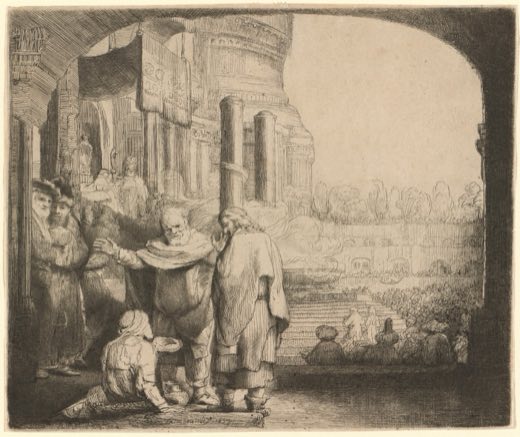 Peter and John Healing the Cripple at the Gate of the TempleRembrandt
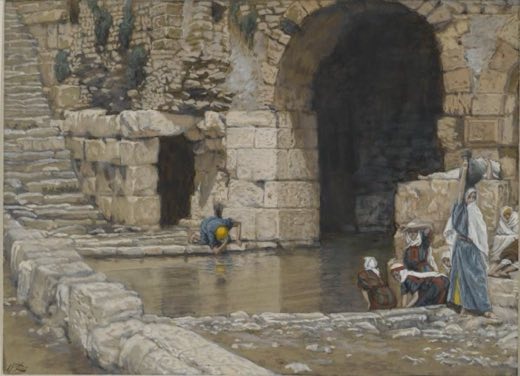 The Blind Man Washes in the Pool of Siloam (Le aveugle-né se lave à la piscine de Siloë)James Tissot
See also
- Blindness and the eyesSickness and healing
- The lame and the paralyzedSickness and healing
- The deaf and the muteSickness and healing
- Rich and poorHuman life in Bible times
- Prophetesses, a judge and queensHuman life in Bible times
- Mephibosheth, son of JonathanPeople
Sources: Tyndale Open Bible Dictionary © 2023 Tyndale House Publishers, CC BY-SA 4.0 — adapted and shortened; the original work is available for free at tyndaleopenresources.com · Sources and rights