Encyclopedia › Languages of the Bible
Languages of the Bible
Messiah and Christ: the Anointed One
Hebrew mashiach, Greek Christos, “anointed” · kings, priests and Cyrus · “first called Christians at Antioch”
Messiah and Christ are the same word in two languages: Hebrew mashiach and Greek Christos both mean “anointed”, smeared with oil. Kings and priests were set apart by anointing. Samuel “took the horn of oil and anointed” David (1 Samuel 16:13), and David would not raise his hand against Saul, “the LORD’s anointed” (1 Samuel 24:6). The Law speaks of “the anointed priest” (Leviticus 4:3), and Isaiah even calls the Persian king Cyrus the LORD’s “anointed” (Isaiah 45:1), chosen to send the exiles home.
Psalms and prophets spoke of an Anointed One to come: kings take their stand “against the LORD and against His Anointed One” (Psalm 2:2), and Daniel speaks of “the Messiah, the Prince” (Daniel 9:25). The Gospels proclaim that Jesus is this Messiah. Andrew told his brother, “We have found the Messiah” (which is translated as Christ) (John 1:41), and the Samaritan woman said, “I know that Messiah” (called Christ) “is coming” (John 4:25). Peter confessed, “You are the Christ, the Son of the living God” (Matthew 16:16), and at Pentecost he proclaimed that God has made Jesus “both Lord and Christ” (Acts 2:36). So often was the title joined to His name that “Jesus Christ” became almost one name, and at Antioch the disciples were first called Christians, “Christ’s people” (Acts 11:26).
In art
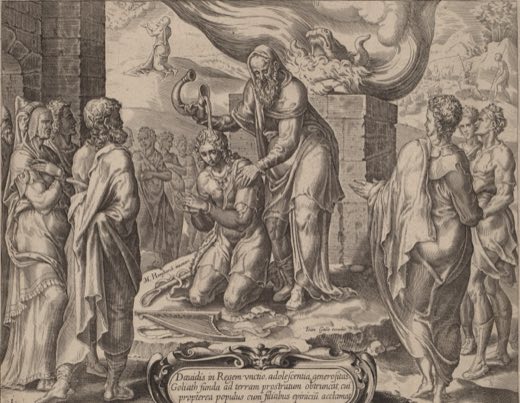 Samuel Anointing DavidAfter Maarten van Heemskerck
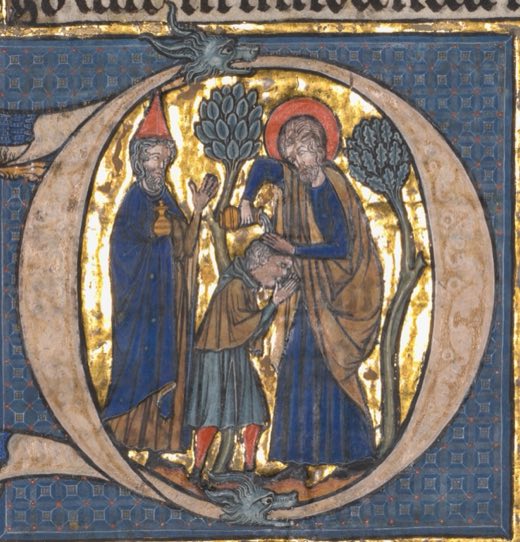 Single Leaf Excised from a Psalter: Initial D[ominus illuminatio mea] with Samuel Anointing DavidUnknown French painter
See also
- Greek words the Bible spreadLanguages of the Bible
- Anointing oilTabernacle and temple
- Olive oilFood and drink
- The name of God: YHWH, the LORD, I AMLanguages of the Bible
- Rabbi, Rabboni and Master: how Jesus was addressedLanguages of the Bible
- Antioch: a royal city on the OrontesCities of the Bible
- The Way, Nazarenes and ChristiansJewish groups and the Roman world
- JesusPeople
- DavidPeople
- CyrusPeople
Sources: Tyndale Open Bible Dictionary © 2023 Tyndale House Publishers, CC BY-SA 4.0 — adapted and shortened; the original work is available for free at tyndaleopenresources.com · Sources and rights