Encyclopedia › Languages of the Bible
Languages of the Bible
Latin words that stayed: Calvary, INRI, Ecce homo
Calvaria, “skull” · INRI · Ecce homo · Noli me tangere · Magnificat · Nunc dimittis
For more than a thousand years the Bible of Western Europe was Latin — first the Old Latin, then Jerome’s Vulgate — and many of its words stayed in other languages. The place of the crucifixion, “the Skull” (Luke 23:33), is calvaria in Latin, hence Calvary. Pilate’s notice was written in Hebrew, Latin and Greek (John 19:20); its Latin wording, Iesus Nazarenus Rex Iudaeorum, “Jesus of Nazareth, the King of the Jews” (John 19:19), is shortened to INRI on countless crucifixes. Pilate’s words “Here is the man!” (John 19:5) are in Latin Ecce homo, and Jesus’ words to Mary Magdalene in the garden (John 20:17) are Noli me tangere — both titles of many paintings.
The songs in Luke’s Gospel are still known by their first Latin words: the song of Mary is the Magnificat (Luke 1:46), the song of Simeon the Nunc dimittis (Luke 2:29), the song of the angels Gloria in excelsis. Words such as “testament”, “scripture” and “Passion” came into many languages from Church Latin.
In art
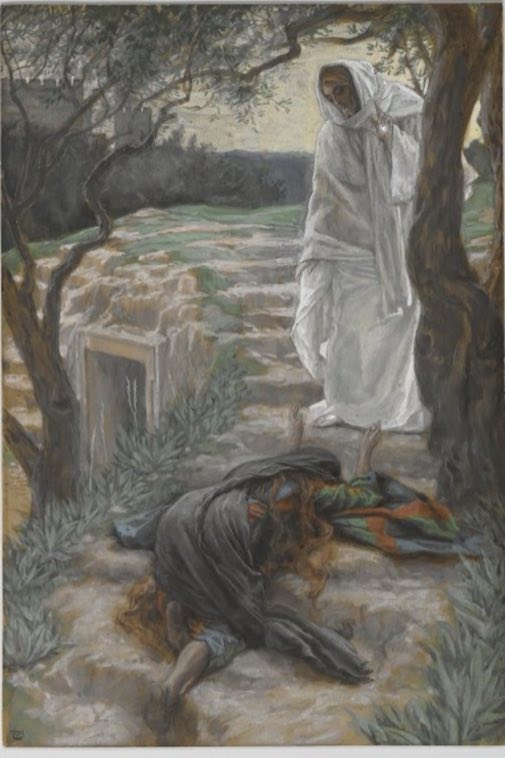 Touch Me Not (Noli me tangere)James Tissot
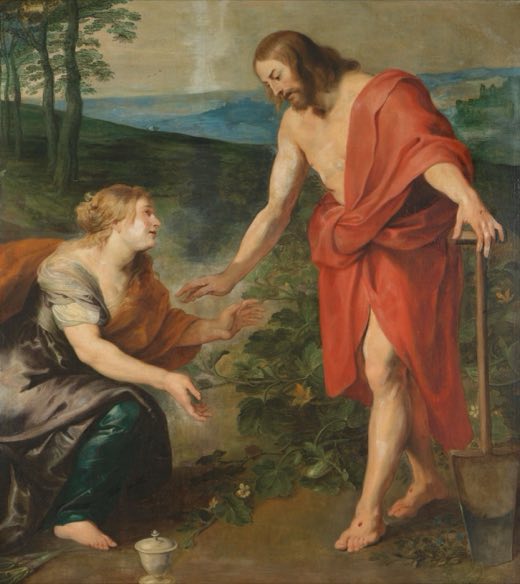 Christ Appearing to Mary Magdalen as a Gardener (Noli me Tangere)Workshop of Rubens
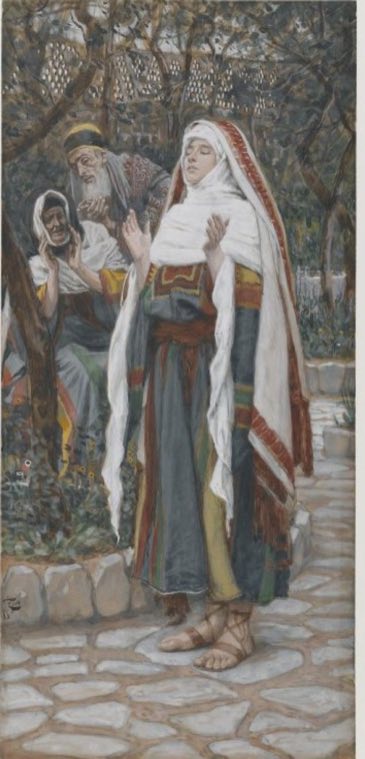 The Magnificat (Le magnificat)James Tissot
Key verses
When they came to the place called The Skull, they crucified Him there, along with the criminals, one on His right and the other on His left.Pilate also had a notice posted on the cross. It read: JESUS OF NAZARETH, THE KING OF THE JEWS.When Jesus came out wearing the crown of thorns and the purple robe, Pilate said to them, “Here is the man!”“Do not cling to Me,” Jesus said, “for I have not yet ascended to the Father. But go and tell My brothers, ‘I am ascending to My Father and your Father, to My God and your God.’”“Sovereign Lord, as You have promised, You now dismiss Your servant in peace.See also
- Latin in the New TestamentJewish groups and the Roman world
- The Vulgate and other ancient versionsHow the Bible came to be
- Hebrew, Aramaic and GreekWriting and books
- Mara bar Serapion and the “wise king”Ancient texts beside the Bible
- The Old Latin BibleHow the Bible was translated around the world
- PilatePeople
- Mary (Matthew 27:56)People
Sources: Tyndale Open Bible Dictionary © 2023 Tyndale House Publishers, CC BY-SA 4.0 — adapted and shortened; the original work is available for free at tyndaleopenresources.com · Sources and rights