Encyclopedia › How the Bible was translated around the world
How the Bible was translated around the world
The Old Latin Bible
Latin translations before Jerome · North Africa and Italy, 2nd–4th centuries · Augustine’s “Itala”
The first Christians in Rome spoke Greek, and Paul wrote his letter “To all in Rome” in Greek (Romans 1:7). Latin translations began in the 2nd century, probably first in North Africa and Italy, among people who did not know Greek. They were made by many hands and differed from one another; the Old Testament was translated from the Greek Septuagint, not from the Hebrew. Tertullian, writing in Carthage about AD 200, and Cyprian, bishop there in the 250s, quote such Latin Bibles. Augustine later remarked that in the early days anyone who got hold of a Greek manuscript and thought he knew a little of both languages ventured to translate it, and he preferred one version that he called the Itala.
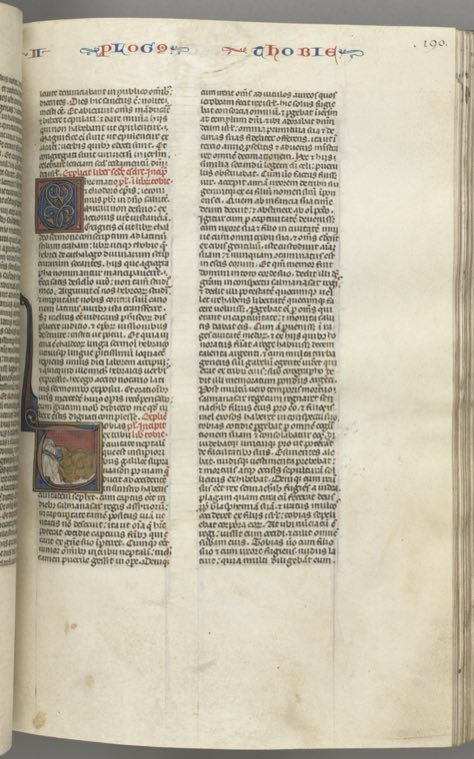
These versions are now called the Vetus Latina, the “Old Latin”. In 382 Pope Damasus asked Jerome to revise the Latin Gospels, and his work grew into the Vulgate, which slowly took their place. Yet the Old Latin did not vanish: its wording lived on in prayers and chants, and the Psalms of the Vulgate are Jerome’s revision of the Old Latin Psalter, not his own translation from Hebrew. Some Old Latin Gospel books survive, among them the Codex Vercellensis of the 4th century, kept at Vercelli in Italy. Since 1945 the Vetus Latina Institute at Beuron in Germany has been gathering every quotation and manuscript to publish them.
See also
- The Vulgate and other ancient versionsHow the Bible came to be
- The SeptuagintHow the Bible came to be
- Latin words that stayed: Calvary, INRI, Ecce homoLanguages of the Bible
- Rome in the first centuryCities of the Bible
- The Targums: the Bible in AramaicHow the Bible was translated around the world
Sources: Tyndale Open Bible Dictionary © 2023 Tyndale House Publishers, CC BY-SA 4.0 — adapted and shortened; the original work is available for free at tyndaleopenresources.com · Sources and rights