Encyclopedia › Languages of the Bible
Languages of the Bible
Aramaic words in the New Testament
Talitha koum · Ephphatha · Eloi, Eloi, lema sabachthani · Abba · Marana tha · Akeldama
Jesus and his disciples most likely spoke Aramaic day to day, and the Greek Gospels keep some of their words, usually with a translation for Greek readers. Mark keeps the most. Taking a girl by the hand, Jesus says, “Talitha koum!”, “Little girl, get up!” (Mark 5:41); healing a deaf man, “Ephphatha!”, “Be opened!” (Mark 7:34); on the cross he cries, “Eloi, Eloi, lema sabachthani?” (Mark 15:34), the first words of Psalm 22 in Aramaic, while Matthew gives the first word as Eli (Matthew 27:46). In Gethsemane he prays “Abba, Father” (Mark 14:36), and Paul twice writes the same Aramaic word in Greek letters (Romans 8:15; Galatians 4:6).
Other words are names and terms: corban, “an offering” (Mark 7:11), raca, an insult (Matthew 5:22), Cephas, “rock”, the name Jesus gave Simon (John 1:42), Golgotha, “the skull”, and Akeldama, “field of blood” (Acts 1:19). Paul ends 1 Corinthians with marana tha, “Our Lord, come!” (1 Corinthians 16:22). The same letters can also be divided maran atha, “our Lord has come”, and scholars read them both ways.
In art
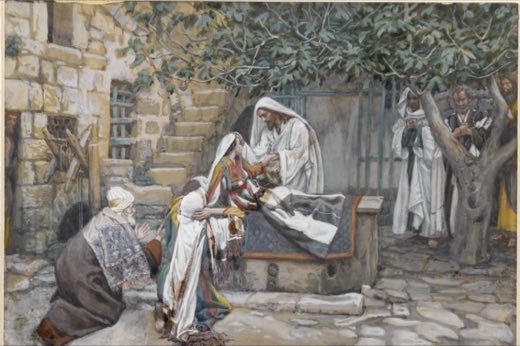 The Daughter of Jairus (La fille de Zäire)
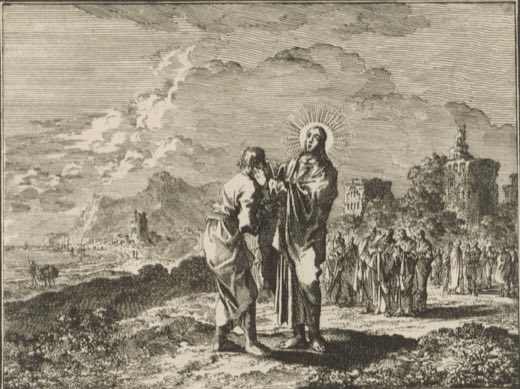 Jesus Heals a Deaf Man
See also
- Aramaic in the Old TestamentLanguages of the Bible
- Hebrew, Aramaic and GreekWriting and books
- Hebrew words in every languageLanguages of the Bible
- Hebrew turns of phrase in GreekLanguages of the Bible
- The deaf and the muteSickness and healing
- Raised from the dead in the GospelsSickness and healing
- How the Gospels were writtenHow the Bible came to be
- Rabbi, Rabboni and Master: how Jesus was addressedLanguages of the Bible
- Names the New Testament translatesLanguages of the Bible
- The Targums: the Bible in AramaicHow the Bible was translated around the world
- GalileansJewish groups and the Roman world
- PeterPeople
Sources: Tyndale Open Bible Dictionary © 2023 Tyndale House Publishers, CC BY-SA 4.0 — adapted and shortened; the original work is available for free at tyndaleopenresources.com · Sources and rights