Encyclopedia › Sickness and healing
Sickness and healing
The deaf and the mute
Hebrew cheresh (deaf), illem (mute) · “Ephphatha!” · Zechariah struck silent
In the ancient world a child born deaf seldom learned to speak, so the deaf and the mute were often the same people, and the Gospels sometimes use one Greek word, kōphos, for both. The Law protected them as it protected the blind: “You must not curse the deaf or place a stumbling block before the blind” (Leviticus 19:14). When Moses said he was slow of speech, the LORD answered, “Who gave man his mouth? Or who makes the mute or the deaf, the sighted or the blind? Is it not I, the LORD?” (Exodus 4:11). Isaiah promised a day when “the ears of the deaf” would be unstopped and “the mute tongue will shout for joy” (Isaiah 35:5–6).
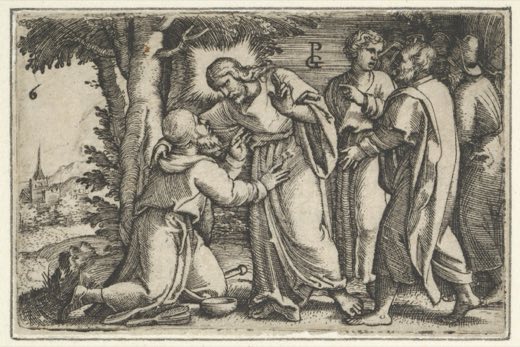
Mark tells of a man in the Decapolis “who was deaf and hardly able to speak”. Jesus took him aside from the crowd, put His fingers into his ears, spat and touched his tongue, and looking up to heaven said, “Ephphatha!” — Aramaic for “Be opened!” And “immediately the man’s ears were opened and his tongue was released” (Mark 7:32–35). In Luke the priest Zechariah, who doubted the angel’s promise of a son, was struck silent until the child was born; when he wrote on a tablet “His name is John”, “immediately Zechariah’s mouth was opened” (Luke 1:63–64).
In art
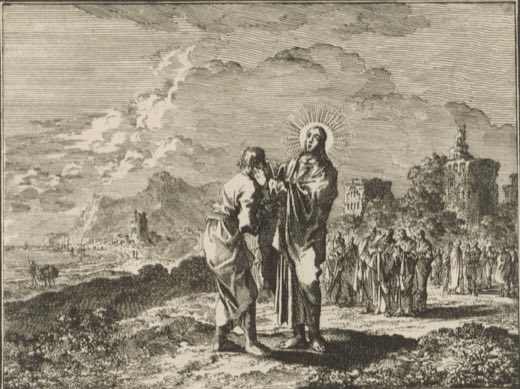 Jesus Heals a Deaf ManJan Luyken
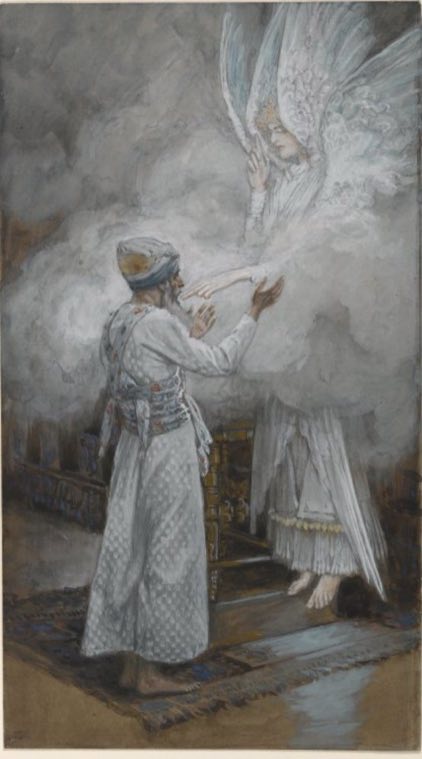 The Vision of Zacharias (Vision de Zacharie)James Tissot
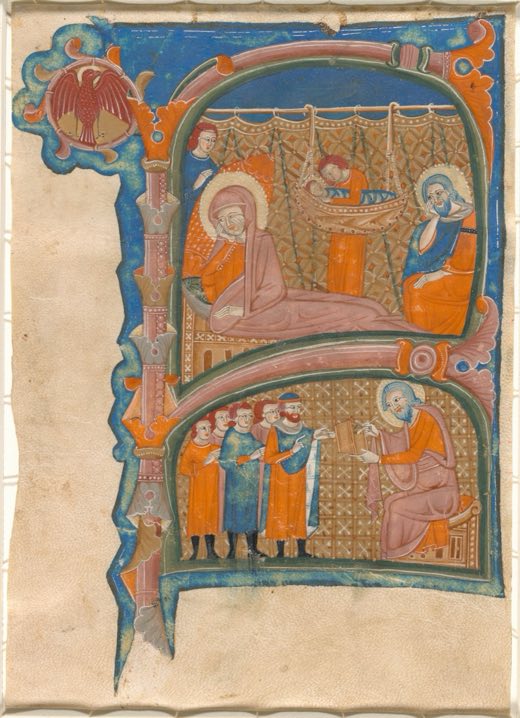 Birth and Naming of John the BaptistItalian painter
See also
- Blindness and the eyesSickness and healing
- The healings of JesusSickness and healing
- Aramaic words in the New TestamentLanguages of the Bible
- The blind and the lame in daily lifeHuman life in Bible times
- Zechariah (Luke)People
Sources: Tyndale Open Bible Dictionary © 2023 Tyndale House Publishers, CC BY-SA 4.0 — adapted and shortened; the original work is available for free at tyndaleopenresources.com · Sources and rights