Encyclopedia › Languages of the Bible
Languages of the Bible
Consonants and vowel points
Hebrew letters are consonants · vowel letters yod, waw, he · vowel points added about AD 500–1000
Like Phoenician and Aramaic, Hebrew was written with consonants only, and the reader supplied the vowels from knowing the language. The same three letters d-b-r could be read davar, “word”, dibber, “he spoke”, or dever, “plague”. To help the reader, scribes began to use some consonants as vowel letters — yod for i, waw for o and u, he for a final a — and they did so more often in the later books and in many Dead Sea Scrolls than in older texts.
The full system came much later. Between about AD 500 and 1000 Jewish scholars, the Masoretes, added dots and dashes above, below and inside the letters for the vowels, and other signs, the accents, for stress, for the melody of public reading and for the pauses within a verse. Several systems were tried, Babylonian and Palestinian among them; the one worked out at Tiberias prevailed. Scrolls read aloud in the synagogue are still written without these signs, so the reader has to know the reading, as readers did when Jesus stood up to read at Nazareth (Luke 4:16). Printed Hebrew Bibles carry all the signs.
In art
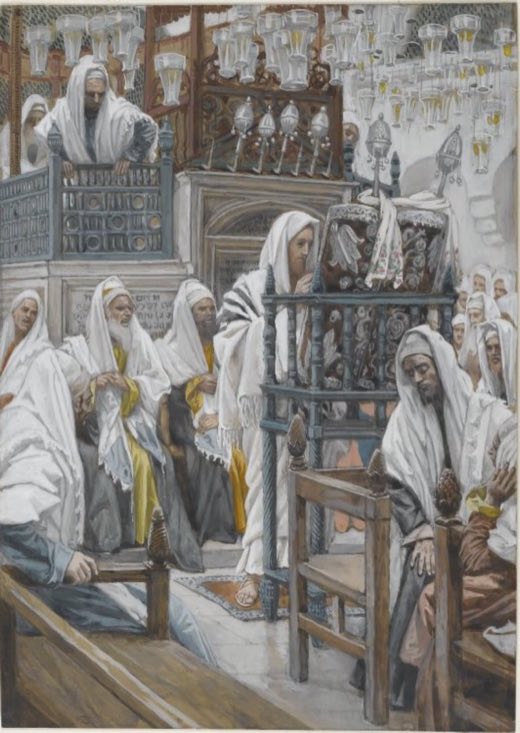 Jesus Unrolls the Book in the Synagogue (Jésus dans la synagogue déroule le livre)
Key verses
Then Jesus came to Nazareth, where He had been brought up. As was His custom, He entered the synagogue on the Sabbath. And when He stood up to read,So they read from the Book of the Law of God, explaining it and giving insight, so that the people could understand what was being read.For I tell you truly, until heaven and earth pass away, not a single jot, not a stroke of a pen, will disappear from the Law until everything is accomplished.See also
- The Masoretic TextHow the Bible came to be
- How Hebrew worksLanguages of the Bible
- The square scriptLanguages of the Bible
- The Aleppo and Leningrad codicesHow the Bible came to be
- The name of God: YHWH, the LORD, I AMLanguages of the Bible
- TiberiasPlaces
Sources: Tyndale Open Bible Dictionary © 2023 Tyndale House Publishers, CC BY-SA 4.0 — adapted and shortened; the original work is available for free at tyndaleopenresources.com · Sources and rights