Encyclopedia › Work and trades
Work and trades
Forced labor and the king’s levy
Hebrew mas · Egypt’s taskmasters · Solomon’s 30,000 in Lebanon · Adoniram stoned at Shechem
Ancient states built their walls, palaces and canals with labor their subjects owed the king — work without pay for a set time, often called the corvée. Israel’s story begins under it: “the Egyptians appointed taskmasters over the Israelites to oppress them with forced labor”, and they built store cities for Pharaoh (Exodus 1:11). When Moses asked to let the people go, Pharaoh had the taskmasters stop supplying straw for the bricks (Exodus 5:6–7). Later the Israelites made some of the peoples of Canaan do forced labor; at Gezer the Canaanites remained, “but they are forced laborers” (Joshua 16:10).
Under David and Solomon Israel had its own levy. “King Solomon conscripted a labor force of 30,000 men from all Israel” and sent them to Lebanon “in monthly shifts of 10,000 men”, one month away and two at home (1 Kings 5:13–14); Adoniram was over them. The account adds 70,000 porters and 80,000 stonecutters. Jeroboam rose as overseer of “the whole labor force of the house of Joseph” (1 Kings 11:28). After Solomon died the northern tribes asked his son to lighten “the heavy yoke”; when Rehoboam refused and sent out Adoram, “who was in charge of the forced labor”, all Israel stoned him, and the kingdom split (1 Kings 12:4, 18). Jeremiah later condemned King Jehoiakim, who built his palace and “makes his countrymen serve without pay” (Jeremiah 22:13).
In art
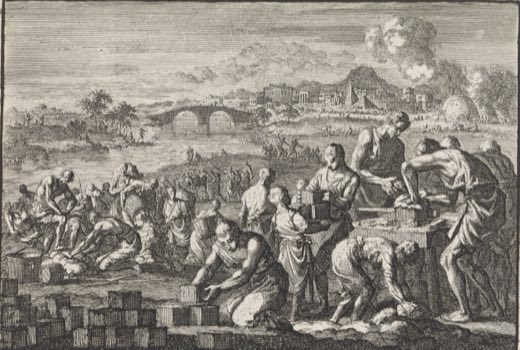 The Israelites Make Bricks in Egypt
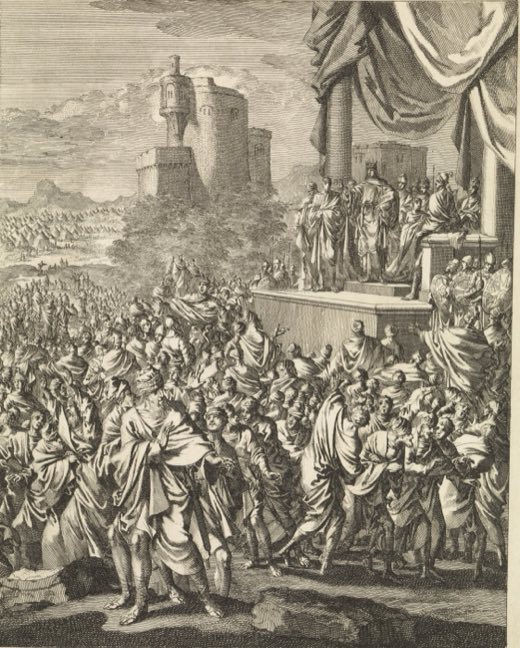 Israel Turns Away from Rehoboam
See also
- Bricks, mortar and plasterBuildings and structures
- Dressed stoneBuildings and structures
- Slaves in the Roman worldJewish groups and the Roman world
- The Millo and the stepped stone structureBuildings and structures
- Temple servants and the descendants of Solomon’s servantsJewish groups and the Roman world
- The seven nations: Hivites, Perizzites, Girgashites and othersPeoples and gods around Israel
- AdoniramPeople
- JeroboamPeople
Sources: Tyndale Open Bible Dictionary © 2023 Tyndale House Publishers, CC BY-SA 4.0 — adapted and shortened; the original work is available for free at tyndaleopenresources.com · Sources and rights