Encyclopedia › Jewish groups and the Roman world
Jewish groups and the Roman world
Slaves in the Roman world
Greek doulos · captives, children of slaves, debtors · household, field, mine and office
In the Roman world slavery was everywhere: in Italy perhaps a sixth to a third of the people were slaves, in the eastern provinces fewer; modern estimates vary. People became slaves as prisoners of war, by birth to a slave mother, by sale of abandoned children or for debt. Slaves worked in fields, mines and workshops, and in households as cooks, nurses, teachers, secretaries and managers; some were trusted and well educated, others lived and died in harsh labor. The Greek doulos covers them all, and English Bibles render it “slave” or “servant”.
The New Testament takes slaves for granted in its stories and letters: the centurion’s “highly valued servant” (Luke 7:2), Rhoda at the gate (Acts 12:13), a slave girl whose fortune-telling earned her masters money (Acts 16:16), and the household rules for slaves and masters (Colossians 3:22). Paul sent the slave Onesimus back to Philemon “no longer as a slave, but better than a slave, as a beloved brother” (Philemon 1:16). His words to slaves in 1 Corinthians 7:21 are read in two ways: take the chance of freedom, or make the most of your present state. The Law of Moses had set a Hebrew slave free in the seventh year (Exodus 21:2).
In art
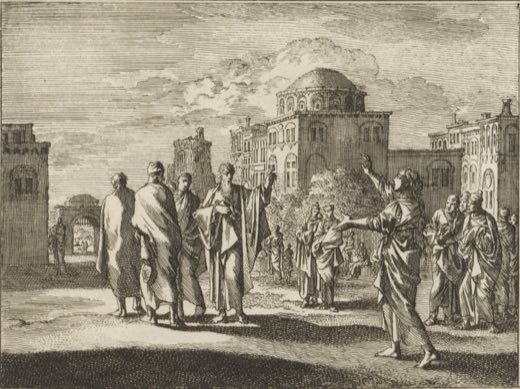 Paul and the Slave Girl at Philippi
See also
- Freedmen and Caesar’s householdJewish groups and the Roman world
- Debt slaves and their releaseHuman life in Bible times
- Freedom bought from Apollo: slaves freed at DelphiThe Greek world of Paul
- Captives and spoilWeapons and warfare
- What Greek and Latin names meantThe Greek world of Paul
- Servants in the householdHome and family
- Forced labor and the king’s levyWork and trades
- Slaves in the Law of MosesHuman life in Bible times
- Trading in peopleTrade, craft and color
- OnesimusPeople
- PhilemonPeople
Sources: Tyndale Open Bible Dictionary © 2023 Tyndale House Publishers, CC BY-SA 4.0 — adapted and shortened; the original work is available for free at tyndaleopenresources.com · Sources and rights