Encyclopedia › Work and trades
Work and trades
Eunuchs and chamberlains
Hebrew saris · Greek eunouchos · Hegai, Ashpenaz, Ebed-melech · the Ethiopian official
Kings of the ancient Near East kept men at court who had been castrated, often as boys, and gave them posts close to the royal family: the women’s quarters, the king’s chamber, the treasury and sometimes the army. Such men could found no rival dynasty, and so they were trusted. The Hebrew word saris, borrowed from an Assyrian title meaning “one of the head”, could also mean simply a high official; Potiphar, who had a wife, is called by it. Persian kings used eunuchs freely: Hegai, “the king’s eunuch in charge of the women”, prepared Esther (Esther 2:3), and two eunuchs “who guarded the entrance” plotted to kill Xerxes (Esther 2:21). In Babylon Daniel and his friends were put under Ashpenaz, “the chief of his court officials” (Daniel 1:3), and in Jerusalem “Ebed-melech the Cushite, a court official in the royal palace” pulled Jeremiah out of the cistern (Jeremiah 38:7).
The Law kept a mutilated man out of “the assembly of the LORD” (Deuteronomy 23:1), but Isaiah promised the eunuchs who keep God’s covenant “a memorial and a name better than that of sons and daughters” (Isaiah 56:5). The first Gentile baptized in Acts was an Ethiopian eunuch, a treasury official of the queen (Acts 8:27). Jesus spoke of some who “live like eunuchs for the sake of the kingdom of heaven” (Matthew 19:12).
In art
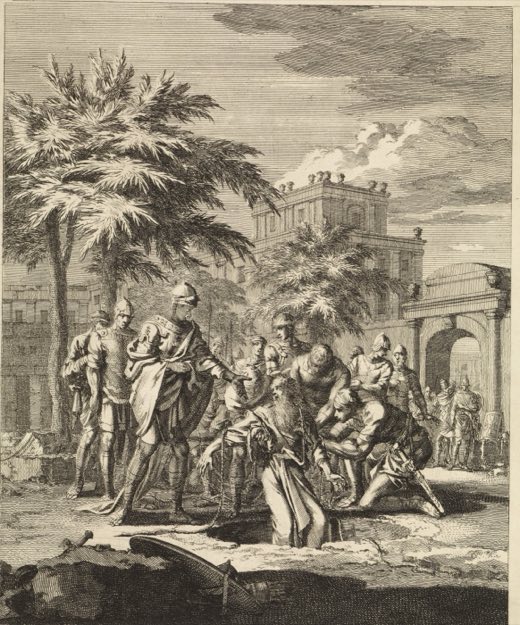 Jeremiah Is Drawn Out of the Cistern
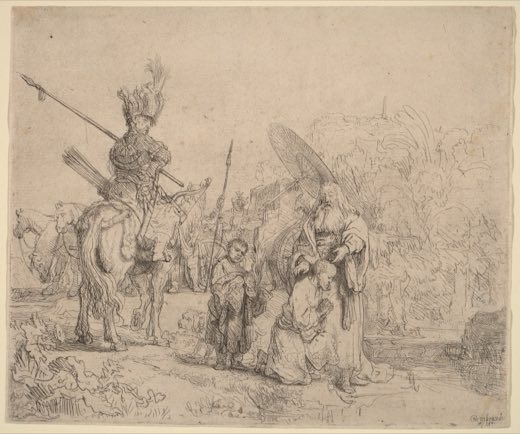 The Baptism of the Eunuch
See also
- Philip and the Ethiopian’s chariotRoads and travel
- Xerxes I (Ahasuerus)Rulers around the Bible
- Kushites: the people of NubiaPeoples and gods around Israel
- HegaiPeople
- AshpenazPeople
- Ebed-melechPeople
- PotipharPeople
Sources: Tyndale Open Bible Dictionary © 2023 Tyndale House Publishers, CC BY-SA 4.0 — adapted and shortened; the original work is available for free at tyndaleopenresources.com · Sources and rights