Encyclopedia › Weather and the forces of nature
Weather and the forces of nature
Thunder, lightning and flash floods
Hebrew qol, “voice”, for thunder · winter storms · dry valleys become torrents in minutes
Thunderstorms belong to the rainy season, most of all to its beginning and end. In Hebrew thunder is often simply qol, “voice” or “sound”, and Psalm 29 follows a storm as it comes in from the sea and over the land: “the voice of the LORD is over the waters,” and it “breaks the cedars” of Lebanon (Psalm 29:3, 5). Job hears “a roaring sound” after the flash of lightning (Job 37:4). A storm in the dry season was unheard of, so the thunder and rain the LORD sent at Samuel’s prayer during the wheat harvest became a sign to the people (1 Samuel 12:17–18).
A heavy downpour on bare, rocky hills runs off fast and fills the dry valleys within minutes, sometimes far from where the rain fell; such floods still sweep away cars in the desert. The Song of Deborah tells that “the River Kishon swept them away” — the chariots of Sisera (Judges 5:21). Jesus’ parable of two builders pictures the same thing: “the rain fell, the torrents raged, and the winds blew” against two houses, and only the one built on the rock stood (Matthew 7:25–27). Ezekiel speaks of rain “in torrents” and hailstones bringing down a badly built wall (Ezekiel 13:11).
In art
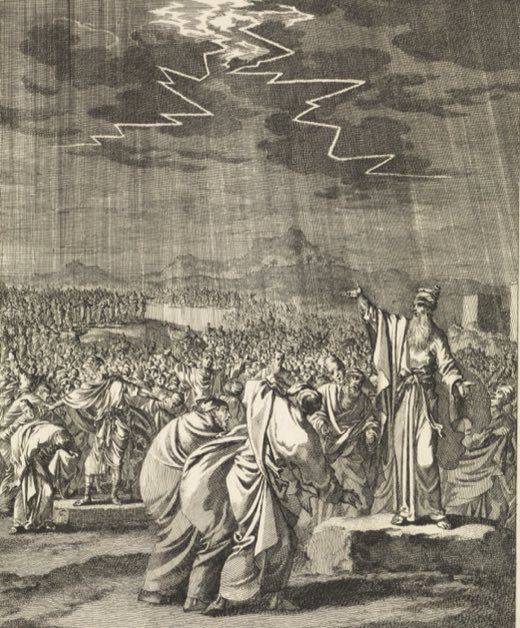 Samuel Calls for Thunder and Rain
All verses on this topic
See also
- Clouds and the four windsWeather and the forces of nature
- Snow, frost and hailWeather and the forces of nature
- Springs, streams and wadisWeather and the forces of nature
- Storms on the lakeThe sea
- The joy of harvestField, orchard and water
- Fire from heavenThe sky of the Bible
- Whirlwinds and storm windsWeather and the forces of nature
- The LORD in the stormWeather and the forces of nature
- Weather in the sayings of JesusWeather and the forces of nature
- KishonPlaces
Sources: Tyndale Open Bible Dictionary © 2023 Tyndale House Publishers, CC BY-SA 4.0 — adapted and shortened; the original work is available for free at tyndaleopenresources.com · Sources and rights