Encyclopedia › Weather and the forces of nature
Weather and the forces of nature
Whirlwinds and storm winds
Hebrew sa‘ar, s‘arah, sufah · dust devils of summer, gales of winter · “reap the whirlwind”
Hebrew has several words for a violent wind: sa‘ar and s‘arah for a storm or tempest, sufah for a gale that sweeps things away. On hot summer days whirling columns of dust rise over the plains and the desert, and in winter gales come in off the sea with the rain. The Bible uses both. Elijah left the earth when “the LORD took Elijah up to heaven in a whirlwind” (2 Kings 2:1). After Job’s friends had finished, “the LORD answered Job out of the whirlwind” (Job 38:1), and Ezekiel’s first vision began with “a whirlwind coming from the north, a great cloud with fire flashing back and forth” (Ezekiel 1:4). Nahum says of the LORD, “His path is in the whirlwind and storm, and clouds are the dust beneath His feet” (Nahum 1:3).
The storm wind is also a picture of sudden ruin. Proverbs warns that disaster will come “like a whirlwind” (Proverbs 1:27), but “When the whirlwind passes, the wicked are no more, but the righteous are secure forever” (Proverbs 10:25). Isaiah sees the rulers of the earth swept away “like stubble” (Isaiah 40:24). Hosea’s words about Israel’s alliances and idols have become a proverb in many languages: “they sow the wind, and they shall reap the whirlwind” (Hosea 8:7).
In art
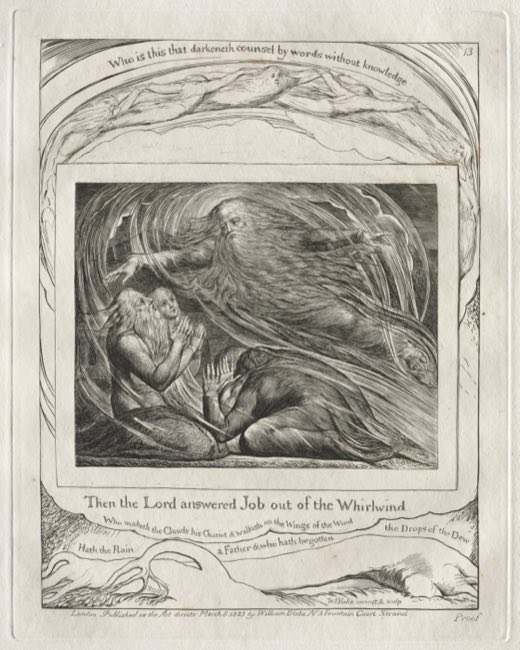 The Book of Job, plate 13: Then the Lord answered Job out of the WhirlwindWilliam Blake
 Elijah Taken Up in a Chariot of FireGustave Doré
See also
- Clouds and the four windsWeather and the forces of nature
- Taken up into heavenThe sky of the Bible
- Storms on the lakeThe sea
- Thunder, lightning and flash floodsWeather and the forces of nature
- ElijahPeople
Sources: Tyndale Open Bible Dictionary © 2023 Tyndale House Publishers, CC BY-SA 4.0 — adapted and shortened; the original work is available for free at tyndaleopenresources.com · Sources and rights