Encyclopedia › Weather and the forces of nature
Weather and the forces of nature
Snow, frost and hail
Hebrew sheleg (snow), barad (hail), kefor (frost) · Mount Hermon white much of the year
Snow falls in the hills of Israel only in some winters and seldom lies long; in Jerusalem it comes perhaps once in a few years. But Mount Hermon, about 2,800 meters high, stays white for much of the year, and Jeremiah asks, “Does the snow of Lebanon ever leave its rocky slopes?” (Jeremiah 18:14). Benaiah went down into a pit and killed a lion “on a snowy day” (2 Samuel 23:20). In summer snow was a picture of coolness — “Like the cold of snow in the time of harvest is a trustworthy messenger” (Proverbs 25:13) — and a psalm says that God “spreads the snow like wool” and “scatters the frost like ashes” (Psalm 147:16).
Hail can ruin a crop in minutes. The hail the LORD sent on Egypt “beat down every plant of the field and stripped every tree” (Exodus 9:25); the barley and flax, already ripe, were lost, while the later wheat was spared. When the Amorites fled down the pass of Beth-horon, the LORD “cast down on them large hailstones from the sky”, and more of them died by the hail than by the swords of Israel (Joshua 10:11). Haggai names hail with blight and mildew among the blows to the harvest (Haggai 2:17).
In art
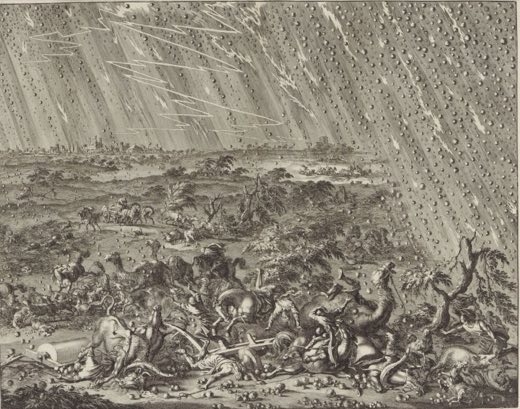 The Plague of Hail
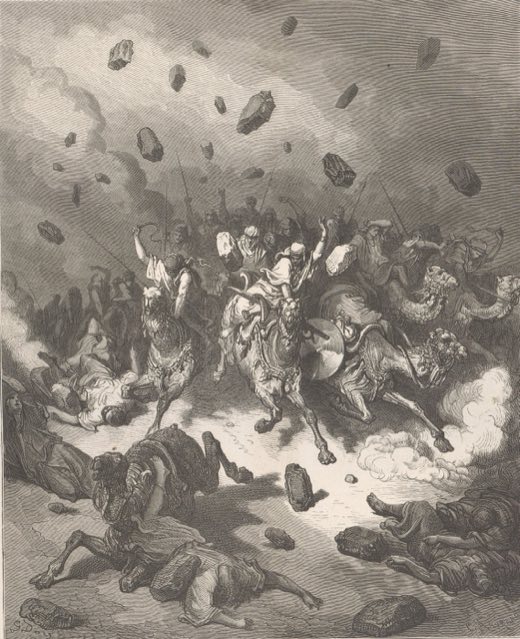 The Hailstones on the Amorites
All verses on this topic
See also
- Summer and winter: the two seasonsWeather and the forces of nature
- Thunder, lightning and flash floodsWeather and the forces of nature
- Gibeon: a treaty and a battleWeapons and warfare
- The plagues of Egypt and the land of EgyptWeather and the forces of nature
- HermonPlaces
Sources: Tyndale Open Bible Dictionary © 2023 Tyndale House Publishers, CC BY-SA 4.0 — adapted and shortened; the original work is available for free at tyndaleopenresources.com · Sources and rights