Encyclopedia › Weather and the forces of nature
Weather and the forces of nature
The LORD in the storm
Thunder at Sinai · Psalm 18 · “Him who rides on the clouds” · not in the wind
When the Bible describes God coming to His people, it often uses the language of a great storm. At Sinai, “on the third day, when morning came, there was thunder and lightning. A thick cloud was upon the mountain, and a very loud blast of the ram’s horn went out” (Exodus 19:16). David’s song of deliverance pictures God coming down to save him: “He made darkness His hiding place, and storm clouds a canopy around Him… The LORD thundered from heaven; the voice of the Most High resounded — hailstones and coals of fire” (Psalm 18:11, 13). A psalm calls Him the one “who rides on the clouds” (Psalm 68:4), and another, “making the clouds His chariot, walking on the wings of the wind” (Psalm 104:3). In Revelation, “from the throne came flashes of lightning, and rumblings, and peals of thunder” (Revelation 4:5).
The Canaanite texts of Ugarit call the storm god Baal “rider on the clouds”, and many scholars think Israel’s poets took up the region’s storm language to say that the LORD, not Baal, rules the sky and the rain. The Bible also marks a limit. When Elijah fled to Horeb, a wind tore the mountains, “but the LORD was not in the wind”; then came an earthquake and a fire, and He was not in them; “after the fire came a still, small voice” (1 Kings 19:11–12).
In art
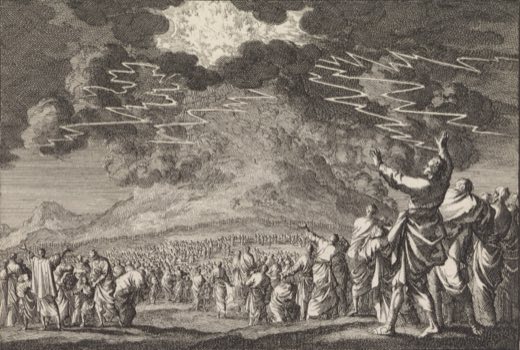 Mount Sinai in Smoke
See also
- Thunder, lightning and flash floodsWeather and the forces of nature
- BaalPeoples and gods around Israel
- The texts of UgaritAncient texts beside the Bible
- A still small voiceBible expressions we still use
- Sinai and Horeb: where was the mountain of God?The land of the Bible
- The pillar of cloud and fireThe sky of the Bible
- Hadad and Rimmon: the storm god of the ArameansPeoples and gods around Israel
- Mount SinaiPlaces
Sources: Tyndale Open Bible Dictionary © 2023 Tyndale House Publishers, CC BY-SA 4.0 — adapted and shortened; the original work is available for free at tyndaleopenresources.com · Sources and rights