Encyclopedia › Weather and the forces of nature
Weather and the forces of nature
Clouds and the four winds
West wind brings rain, north wind cold, east and south wind heat · Hebrew ruach, wind and breath
The west wind off the Mediterranean carries the moisture that falls as rain, so a cloud rising from the sea was the first sign of a storm. On Mount Carmel, as Elijah prayed for rain, his servant went up seven times to look, and at last saw “a cloud as small as a man’s hand rising from the sea,” and soon “the sky grew dark with clouds and wind, and a heavy rain began to fall” (1 Kings 18:44–45). The north wind brings cold, clear air; Proverbs says that it “brings forth rain” (Proverbs 25:23), which some explain by the northwest winds of winter storms. Winds from the east and the south bring dry heat.
The Bible speaks of “the four winds” for the four quarters of the world. Ecclesiastes watches the wind go south and turn north — “round and round it swirls” (Ecclesiastes 1:6) — and warns that “he who watches the wind will fail to sow” (Ecclesiastes 11:4). The Song of Songs calls on the north and the south wind to carry the scent of a garden (Song of Songs 4:16). Hebrew ruach, like Greek pneuma, means both “wind” and “breath” or “spirit”, a double sense on which Jesus’ words to Nicodemus turn (John 3:8).
In art
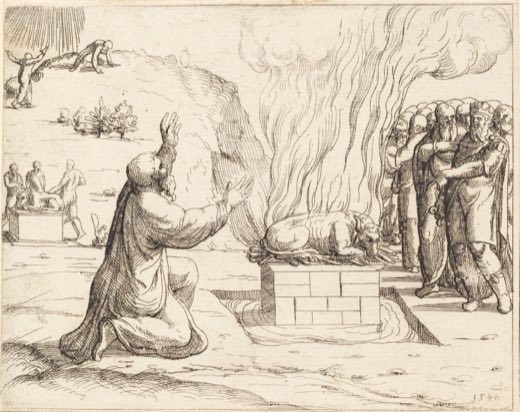 The Rival Sacrifices of Elijah and the Priests of Baal
All verses on this topic
See also
- The east wind: sirocco and khamsinWeather and the forces of nature
- Thunder, lightning and flash floodsWeather and the forces of nature
- Red sky, east wind and rainThe sky of the Bible
- The expanse and the windows of heavenThe sky of the Bible
- The rainbowThe sky of the Bible
- The pillar of cloud and fireThe sky of the Bible
- East in front: how the Bible names directionsRoads and travel
- Whirlwinds and storm windsWeather and the forces of nature
- Mist, haze and morning cloudsWeather and the forces of nature
- The breeze of the dayWeather and the forces of nature
- Weather in the sayings of JesusWeather and the forces of nature
- Mount CarmelPlaces
Sources: Tyndale Open Bible Dictionary © 2023 Tyndale House Publishers, CC BY-SA 4.0 — adapted and shortened; the original work is available for free at tyndaleopenresources.com · Sources and rights