Encyclopedia › Weather and the forces of nature
Weather and the forces of nature
The heat of the day and shade
Summer midday heat · work at dawn and evening · tents, trees and rocks for shade
In the summer months the sun is hard on anyone who works outdoors, and in the Jordan Valley and by the Dead Sea the heat can pass 45°C. Abraham was sitting at the entrance of his tent “in the heat of the day” (Genesis 18:1), and the laborers hired first in Jesus’ parable complain that they “have borne the burden and the scorching heat of the day” (Matthew 20:12). Jacob, keeping Laban’s flocks, remembers the other side of the climate: “the heat consumed me by day and the frost by night” (Genesis 31:40). The boy of Shunem fell ill in the harvest field crying, “My head! My head!” (2 Kings 4:19); by noon he died on his mother’s lap, and Elisha raised him to life (2 Kings 4:35). Many read the illness as sunstroke, though the text does not say.
So shade was a gift: a booth of branches, a tent, a tree, the overhang of a cliff. Isaiah pictures a ruler who will be “like the shadow of a great rock in an arid land” (Isaiah 32:2), and a psalm promises, “The sun will not strike you by day” (Psalm 121:6). Jonah made himself a shelter east of Nineveh and was glad of the shade of a plant (Jonah 4:5–6).
In art
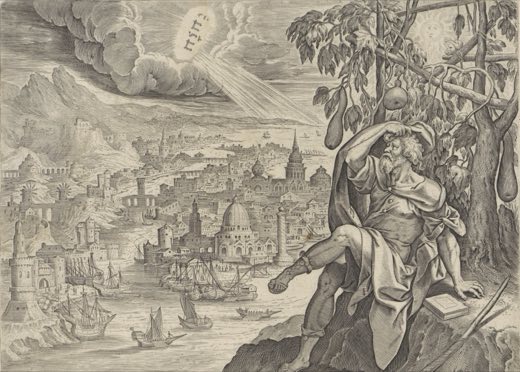 Jonah under the Gourd
See also
- Summer and winter: the two seasonsWeather and the forces of nature
- The east wind: sirocco and khamsinWeather and the forces of nature
- Jonah’s plantPlants of the Bible
- Fires in fields and forestsWeather and the forces of nature
- Morning, noon and evening: the parts of the dayHuman life in Bible times
- The sunThe sky of the Bible
- Mist, haze and morning cloudsWeather and the forces of nature
- The breeze of the dayWeather and the forces of nature
Sources: Tyndale Open Bible Dictionary © 2023 Tyndale House Publishers, CC BY-SA 4.0 — adapted and shortened; the original work is available for free at tyndaleopenresources.com · Sources and rights