Encyclopedia › Human life in Bible times
Human life in Bible times
More than one wife
Lamech’s two wives · rival wives · Solomon’s 700 · “the husband of but one wife”
Genesis tells of one man and one woman who “become one flesh” (Genesis 2:24), and the first man said to take two wives is Lamech, of the line of Cain (Genesis 4:19). After him many did: Abraham took Hagar when Sarah had no child, Jacob married two sisters and their two maids, Gideon had seventy sons “since he had many wives” (Judges 8:30). The Law did not forbid it but set limits. A man could not give the firstborn’s right to the son of the wife he loved more (Deuteronomy 21:15–16), and the king “must not take many wives for himself, lest his heart go astray” (Deuteronomy 17:17).
The stories show the cost. Sarah and Hagar, Rachel and Leah, Hannah and Peninnah live in bitter rivalry; Hannah’s “rival would provoke her and taunt her viciously” (1 Samuel 1:6). David’s sons by different wives fought for the throne. Solomon “had seven hundred wives of royal birth and three hundred concubines—and his wives turned his heart away” (1 Kings 11:3); many were daughters of foreign kings, sealing treaties. Rehoboam had eighteen wives and sixty concubines (2 Chronicles 11:21). A concubine was a lesser wife, often a slave; her sons were sometimes counted among the heirs, as Jacob’s sons by Bilhah and Zilpah were. Most ordinary men could afford one wife. In the New Testament Jesus goes back to “the two will become one flesh” (Matthew 19:5), and an overseer must be “the husband of but one wife” (1 Timothy 3:2).
In art
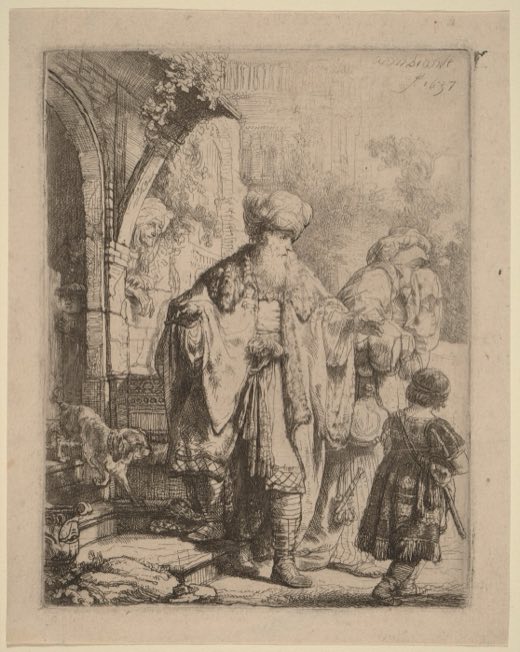 Abraham Casting Out Hagar and Ishmael
See also
- Betrothal and weddingHome and family
- The firstborn: birthright and redemptionHuman life in Bible times
- Bride-price and dowryHuman life in Bible times
- Divorce in the Law and the GospelsHuman life in Bible times
- The householdHome and family
- Lamech, son of MethusaelPeople
- HannahPeople
- PeninnahPeople
- SolomonPeople
Sources: Tyndale Open Bible Dictionary © 2023 Tyndale House Publishers, CC BY-SA 4.0 — adapted and shortened; the original work is available for free at tyndaleopenresources.com · Sources and rights