Encyclopedia › Money and measures
Money and measures
Vows and redemption prices
Leviticus 27 · fifty shekels to three · five shekels for a firstborn son
A person could vow himself or a member of his family to the LORD, and then pay the sanctuary in silver instead. Leviticus 27 sets the price by age and sex, roughly the value of a person’s work: a man from twenty to sixty, “fifty shekels of silver, according to the sanctuary shekel” (Leviticus 27:3), a woman thirty; from five to twenty years, twenty shekels for a boy and ten for a girl; from a month to five years, five and three; past sixty, fifteen and ten. The poor were not shut out: if someone could not pay, the priest “shall set the value according to what the one making the vow can afford” (Leviticus 27:8). Twenty shekels, the price for a boy, is what Joseph’s brothers took for him from the traders (Genesis 37:28).
Every firstborn son belonged to the LORD and was bought back for “five shekels of silver, according to the sanctuary shekel, which is twenty gerahs” (Numbers 18:16) — the same as the valuation of a child under five. In the wilderness the Levites took the place of the firstborn, and for the 273 firstborn who outnumbered them five shekels each were paid (Numbers 3:46–47). Jewish families still keep the custom of redeeming a firstborn son, a month after birth, with five silver coins. Animals and fields vowed to the sanctuary could also be bought back, with a fifth added.
In art
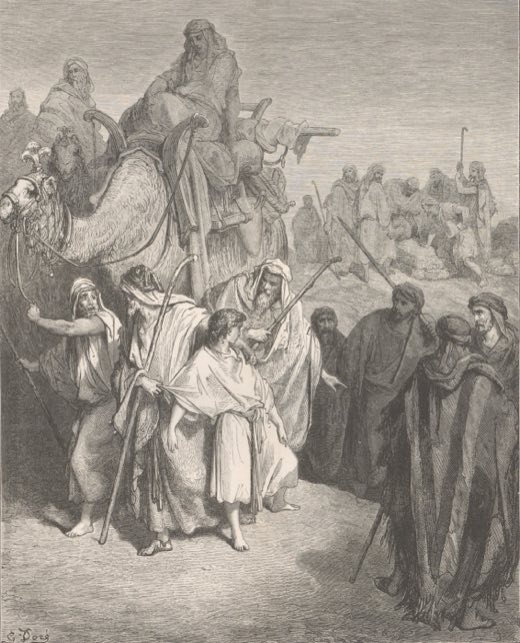 Joseph Sold by His Brothers
See also
- Nazirites and vowsTabernacle and temple
- ShekelMoney and measures
- Gerah, beka and pimMoney and measures
- The kinsman-redeemer (go’el)Human life in Bible times
- Priests and LevitesTabernacle and temple
- The firstborn: birthright and redemptionHuman life in Bible times
Sources: Tyndale Open Bible Dictionary © 2023 Tyndale House Publishers, CC BY-SA 4.0 — adapted and shortened; the original work is available for free at tyndaleopenresources.com · Sources and rights