Encyclopedia › Sickness and healing
Sickness and healing
The lame and the paralyzed
Mephibosheth, lame from a fall · a man let down through a roof · the withered hand
Those who could not walk depended on others to carry them and often lived by begging. The Bible gives one such man a full story. Mephibosheth, Jonathan’s son, was five years old when news came of the deaths of Saul and Jonathan; “his nurse picked him up and fled, but as she was hurrying to escape, he fell and became lame” (2 Samuel 4:4). Years later King David, for Jonathan’s sake, gave him back his grandfather’s land and a place at the royal table, “and he was lame in both feet” (2 Samuel 9:13).
In Capernaum four men brought a paralyzed friend to Jesus; unable to get through the crowd, “they uncovered the roof above Him, made an opening, and lowered the paralytic on his mat” (Mark 2:4). Jesus told him to get up, pick up his mat and go home, and he “walked out in front of them all” (Mark 2:12). In a synagogue on the Sabbath Jesus told a man with a withered hand, “Stretch out your hand.” He stretched it out, “and it was restored” (Mark 3:5) — while others watched to accuse Jesus of healing on the Sabbath. At the Pool of Bethesda Jesus healed a man who “had been an invalid for thirty-eight years” (John 5:5), and in Acts a man “lame from birth”, who begged at the temple gate called Beautiful, went into the courts “walking and leaping and praising God” (Acts 3:2, 8).
In art
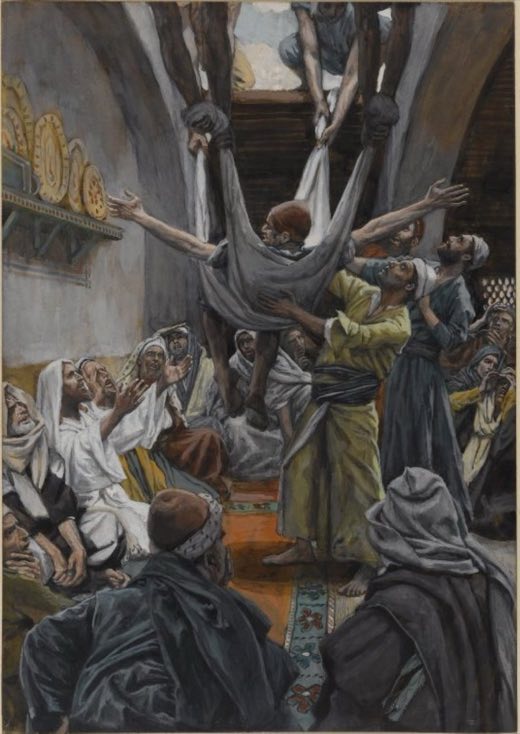 The Palsied Man Let Down through the Roof (Le paralytique descendu du toit)James Tissot
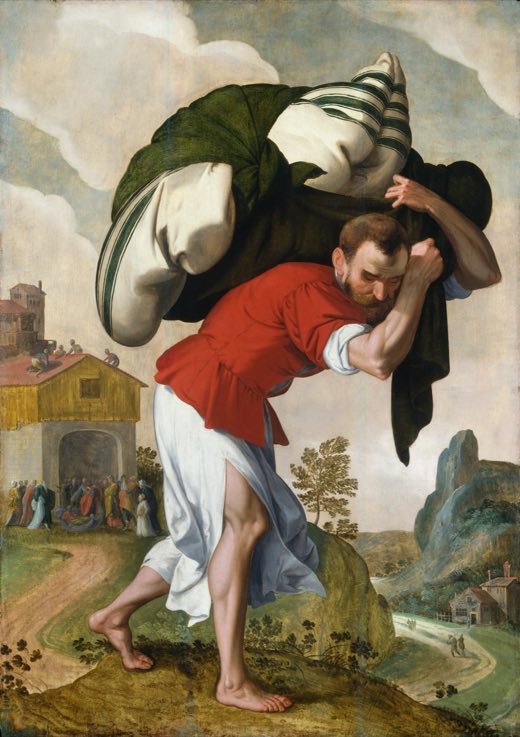 The Healing of the ParalyticNetherlandish painter
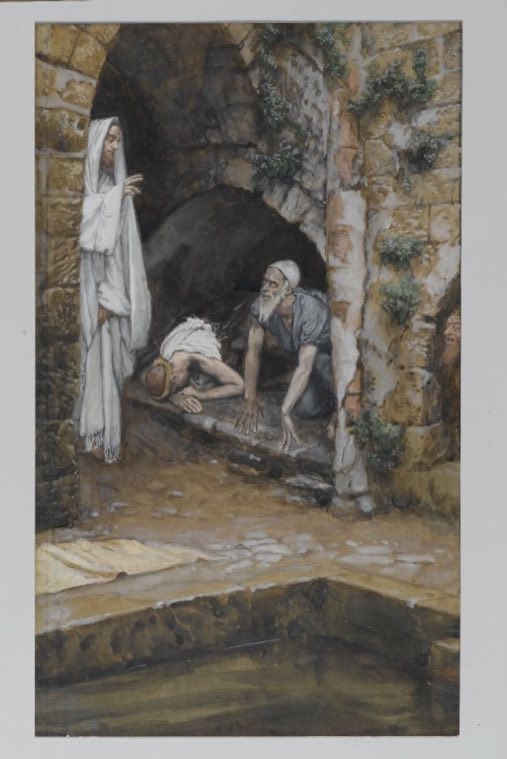 The Man with an Infirmity of Thirty-Eight Years (Le malade de trente-huit ans)James Tissot
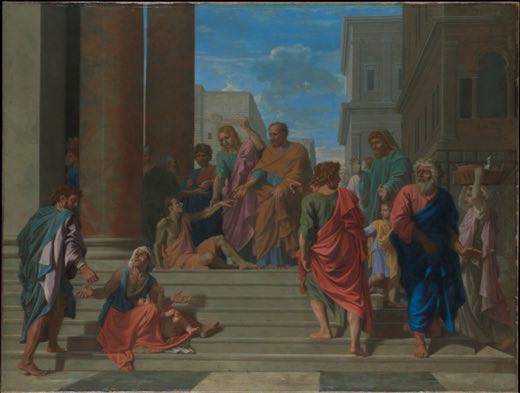 Saints Peter and John Healing the Lame ManNicolas Poussin
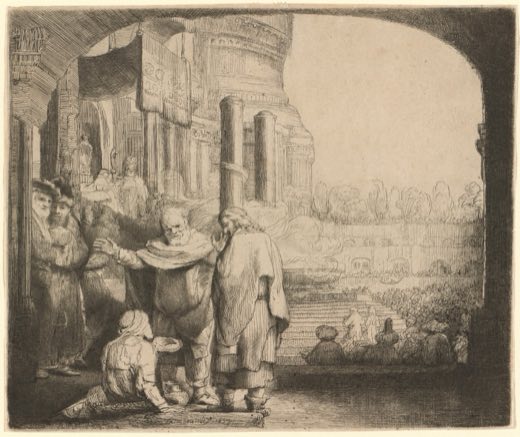 Peter and John Healing the Cripple at the Gate of the TempleRembrandt
See also
- The Pool of BethesdaThe Bible in stone
- The healings of JesusSickness and healing
- Healings by the apostlesSickness and healing
- Roofs and upper roomsBuildings and structures
- The blind and the lame in daily lifeHuman life in Bible times
- Mephibosheth, son of JonathanPeople
Sources: Tyndale Open Bible Dictionary © 2023 Tyndale House Publishers, CC BY-SA 4.0 — adapted and shortened; the original work is available for free at tyndaleopenresources.com · Sources and rights