Encyclopedia › Field, orchard and water
Field, orchard and water
Cisterns and empty pits
Hebrew bor · bell-shaped chambers cut in rock · plastered from about the 13th century BC
Where no spring or well was near, people cut cisterns in the rock: a chamber shaped like a bell or a bottle, with a narrow mouth that a stone could close, filled during the winter rains by channels from roofs, courtyards and slopes. From about the 13th century BC lime plaster kept the water in the porous rock, and villages could then grow up in the hills far from springs. Moses spoke of a land with wells “that you did not dig” (Deuteronomy 6:11), and King Uzziah “built towers in the desert and dug many cisterns” for his many herds (2 Chronicles 26:10). Archaeologists find cisterns under houses and in courtyards at almost every site in the hill country.
Water kept for months was not as good as “living water” from a spring, and a cracked cistern lost it all. Jeremiah uses the picture: “They have forsaken Me, the fountain of living water, and they have dug their own cisterns — broken cisterns that cannot hold water” (Jeremiah 2:13). An empty cistern made a ready prison. Joseph’s brothers threw him into a pit: “Now the pit was empty, with no water in it” (Genesis 37:24). Jeremiah was lowered on ropes into the cistern of Malchiah, “which had no water but only mud, and Jeremiah sank down into the mud” (Jeremiah 38:6). A dry well could also hide people: at Bahurim two of David’s men climbed down into one, and a woman spread a covering over its mouth with grain on top (2 Samuel 17:18–19).
In art
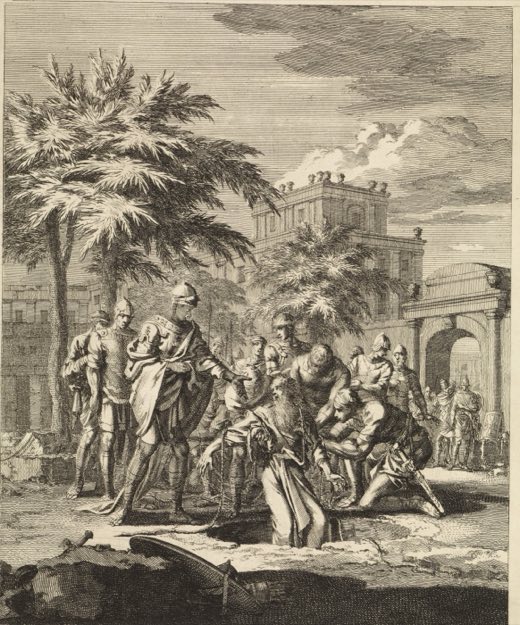 Jeremiah Is Drawn Out of the Cistern
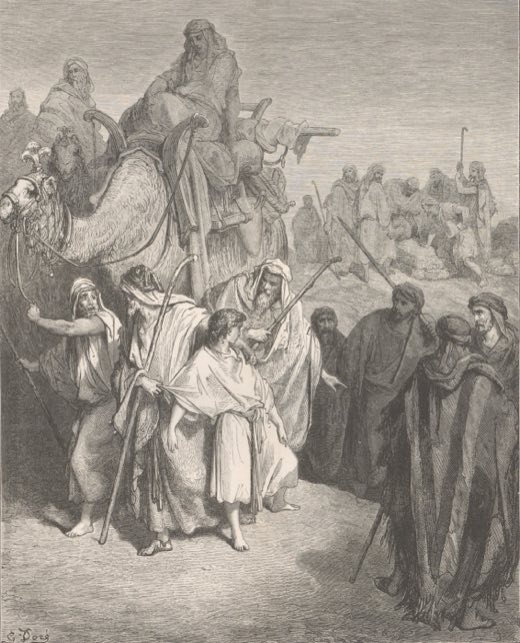 Joseph Sold by His Brothers
See also
- Drawing water: stones, ropes and troughsField, orchard and water
- Irrigation: Egypt, Babylon and the gardensField, orchard and water
- Water for the houseHome and family
- Prisons, stocks and chainsBuildings and structures
- Drinking waterFood and drink
- Kings and their lands: David, Uzziah and Naboth’s vineyardField, orchard and water
- Hidden treasure and buried coinsMoney and measures
- JosephPeople
- JeremiahPeople
- UzziahPeople
Sources: Tyndale Open Bible Dictionary © 2023 Tyndale House Publishers, CC BY-SA 4.0 — adapted and shortened; the original work is available for free at tyndaleopenresources.com · Sources and rights