Encyclopedia › Field, orchard and water
Field, orchard and water
Drawing water: stones, ropes and troughs
Hebrew be’er (well), sha’av (to draw) · a stone over the mouth · troughs for the flocks
A well was a shaft dug or cut down to the water under the ground, often lined with stones at the top and closed with a heavy slab, so that it would not be fouled. Near Haran “a large stone covered the mouth of the well”; the shepherds waited until all the flocks had gathered, then “would roll away the stone from the mouth of the well and water the sheep” (Genesis 29:2–3) — and Jacob, when he saw Rachel, rolled it away by himself (Genesis 29:10). Beside a well stood stone troughs. Rebekah “quickly emptied her jar into the trough and ran back to the well to draw water, until she had drawn water for all his camels” (Genesis 24:20).
Water was drawn with a jar or a leather bucket on a rope, so one who came without them could not draw at all; the Samaritan woman said to Jesus, “You have nothing to draw with and the well is deep” (John 4:11). Ecclesiastes takes the broken gear of a well as a picture of death: “before the pitcher is shattered at the spring and the wheel is broken at the well” (Ecclesiastes 12:6). The seven daughters of the priest of Midian drew water and filled the troughs for their father’s flock, until shepherds drove them off and Moses helped them (Exodus 2:16–17). Hauling water was hard daily work: the Gibeonites, who had tricked Joshua into a treaty, were made “woodcutters and water carriers for the whole congregation” (Joshua 9:21).
In art
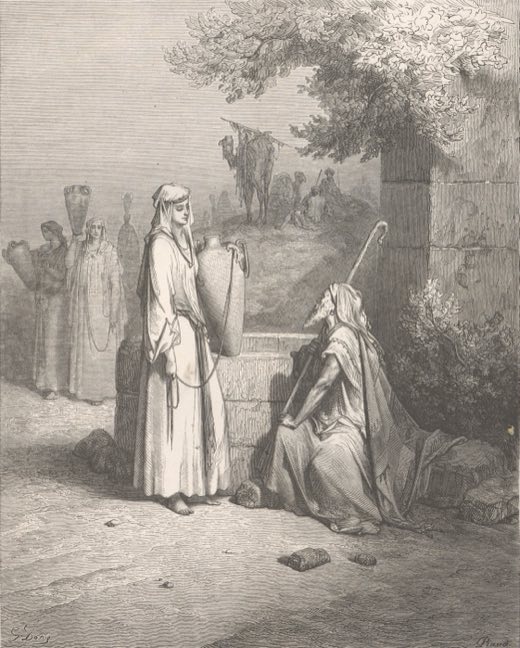 Rebekah at the WellGustave Doré
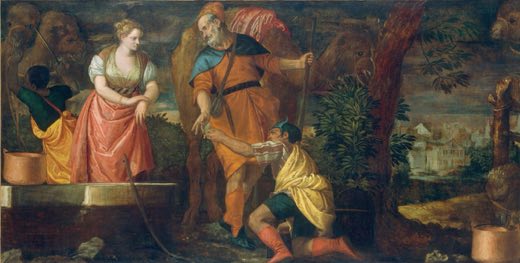 Rebecca at the WellVeronese and workshop
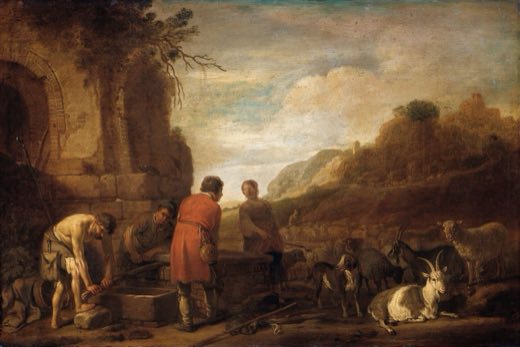 The Meeting of Jacob and RachelClaes Moeyaert
Key verses
He looked and saw a well in the field, and near it lay three flocks of sheep, because the sheep were watered from this well. And a large stone covered the mouth of the well. When all the flocks had been gathered there, the shepherds would roll away the stone from the mouth of the well and water the sheep. Then they would return the stone to its place over the mouth of the well.And she quickly emptied her jar into the trough and ran back to the well to draw water, until she had drawn water for all his camels.Now the priest of Midian had seven daughters, and they came to draw water and fill the troughs to water their father’s flock. And when some shepherds came along and drove them away, Moses rose up to help them and watered their flock.“Sir,” the woman replied, “You have nothing to draw with and the well is deep. Where then will You get this living water?Remember Him before the silver cord is snapped and the golden bowl is crushed, before the pitcher is shattered at the spring and the wheel is broken at the well,They continued, “Let them live, but let them be woodcutters and water carriers for the whole congregation.” So the leaders kept their promise.All verses on this topic
See also
- Cisterns and empty pitsField, orchard and water
- Water for the houseHome and family
- Jacob’s wellThe land of the Bible
- Springs, wells and oasesThe desert
- Jars, jugs and potsherdsHome and family
- Drinking waterFood and drink
- A drop in the bucketBible expressions we still use
- A woman’s work at homeHome and family
- RebekahPeople
- RachelPeople
Sources: Tyndale Open Bible Dictionary © 2023 Tyndale House Publishers, CC BY-SA 4.0 — adapted and shortened; the original work is available for free at tyndaleopenresources.com · Sources and rights