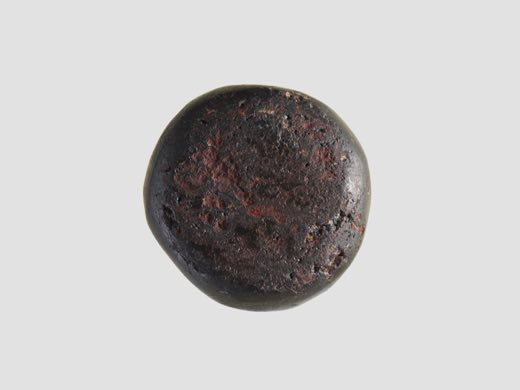
Encyclopedia › Money and measures
Money and measures
Hidden treasure and buried coins
Achan’s tent · stores hidden in a field · the treasure in the parable · hoards of coins
With no banks for ordinary people, the safest place for silver was in the ground. Achan hid what he had taken at Jericho “in the ground inside my tent, with the silver underneath” (Joshua 7:21). When Jerusalem fell, ten men saved their lives by telling Ishmael, “we have hidden treasure in the field—wheat, barley, oil, and honey!” (Jeremiah 41:8): grain and oil were also stored in pits and cisterns. Proverbs uses the picture for wisdom: “seek it like silver and search it out like hidden treasure” (Proverbs 2:4).
Jesus’ parables come from the same world. A man finds “treasure hidden in a field”, hides it again, and “in his joy he went and sold all he had and bought that field” (Matthew 13:44). In the parable of the talents one servant “dug a hole in the ground, and hid his master’s money” (Matthew 25:18); in Luke’s parable another keeps his mina “laid away in a piece of cloth” (Luke 19:20). Archaeologists find what owners never came back for: jars of cut silver from Old Testament times, and coin hoards from Roman Judea — among them, on Mount Carmel, thousands of silver shekels of Tyre hidden about the middle of the 1st century BC. Many hoards were buried in times of war; their owners did not return.
In art
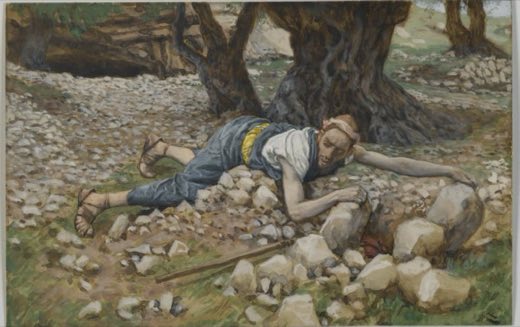 The Hidden Treasure (Le trésor enfoui)
See also
- Silver by weight: money before coinsMoney and measures
- TalentMoney and measures
- Mina and poundMoney and measures
- Cisterns and empty pitsField, orchard and water
- Parables of the fieldField, orchard and water
- Thieves who dig through wallsHome and family
- Tracing metals to their minesHow the Bible’s world is studied
Sources: Tyndale Open Bible Dictionary © 2023 Tyndale House Publishers, CC BY-SA 4.0 — adapted and shortened; the original work is available for free at tyndaleopenresources.com · Sources and rights