Home › Explore › Scholars disagree › Where was Emmaus?
Where was it?
Where was Emmaus?
Emmaus Nicopolis, El-Qubeibeh or Motza — which village did the two disciples walk to?
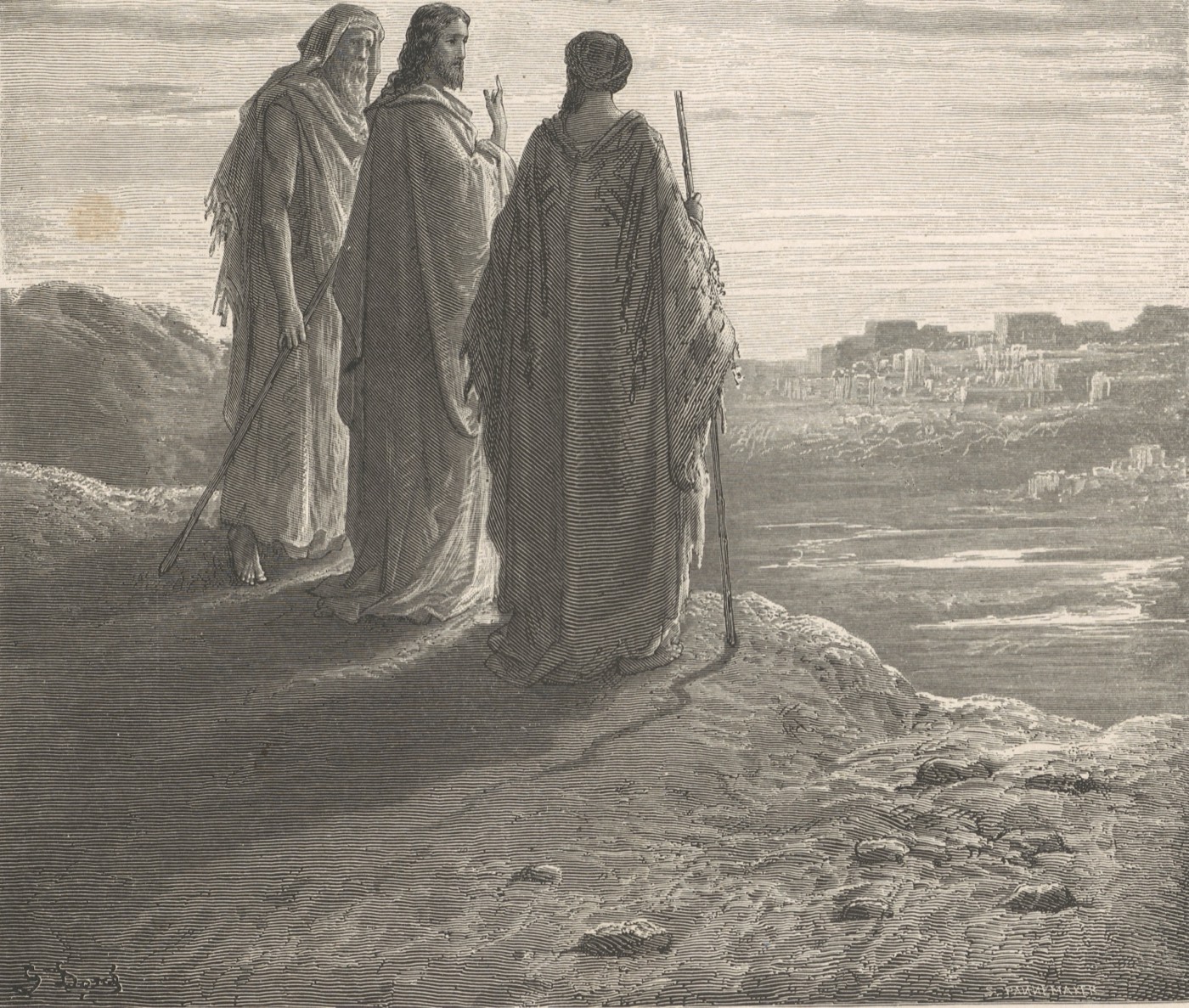
On the evening of the resurrection two disciples walked from Jerusalem to a village called Emmaus, and a stranger joined them on the road. Luke gives the distance — and the manuscripts give two different numbers.
What the Bible says
A village called Emmaus, sixty stadia from JerusalemLuke 24:13
That same day two of them were going to a village called Emmaus, about seven miles from Jerusalem.One of them is named CleopasLuke 24:18
One of them, named Cleopas, asked Him, “Are You the only visitor to Jerusalem who does not know the things that have happened there in recent days?”‘Stay with us, for it is nearly evening’Luke 24:29
But they pleaded with Him, “Stay with us, for it is nearly evening and the day is almost over.” So He went in to stay with them.That very hour they return to JerusalemLuke 24:33
And they got up that very hour and returned to Jerusalem. There they found the Eleven and those with them, gathered together1View 1
Emmaus Nicopolis (Imwas)
Eusebius and Jerome; some old manuscripts, such as Codex Sinaiticus.
- A town named Emmaus here is well known from 1 Maccabees and Josephus, and Christians honored it from the 3rd century.
- Codex Sinaiticus and a few other manuscripts read ‘160 stadia’ — about 30 kilometers, the distance to Nicopolis.
2View 2
El-Qubeibeh
Crusader-age tradition; the Franciscans, who keep a church there.
- Most manuscripts read ‘60 stadia’ — about 11 kilometers — and El-Qubeibeh lies about that far north-west of Jerusalem on an old road.
- Pilgrims of the 12th century honored it as Emmaus.
3View 3
Motza (Qaloniya)
Many modern scholars, following Josephus.
- Josephus tells that Vespasian settled 800 veterans at ‘a place called Emmaus, thirty stadia from Jerusalem’.
- Its later name, Qaloniya, comes from the Latin colonia; thirty stadia there and thirty back make Luke’s sixty.
What we know for sure
Luke names the village and its distance from Jerusalem; the two walked there and back to Jerusalem the same evening (Luke 24:33).
Sources
- Josephus, Jewish War 7.217
- Eusebius, Onomasticon (early 4th century)
- Jerome Murphy-O’Connor, The Holy Land: An Oxford Archaeological Guide (5th ed., 2008)