Encyclopedia › Roads and travel
Roads and travel
The road to Emmaus
Easter evening · “about seven miles from Jerusalem” · several places proposed
On the day of the resurrection “two of them were going to a village called Emmaus, about seven miles from Jerusalem” (Luke 24:13). One was Cleopas; the other is not named. As they talked, “Jesus Himself came up and walked along with them. But their eyes were kept from recognizing Him” (Luke 24:15–16). On the way He explained to them what the Scriptures said about Him. At the village they pressed Him: “Stay with us, for it is nearly evening and the day is almost over” (Luke 24:29). At the table He broke the bread, they knew Him, and He vanished. “Were not our hearts burning within us as He spoke with us on the road?” they said, and “they got up that very hour and returned to Jerusalem” (Luke 24:32–33) — the same road again, now in the dark.
Where Emmaus lay is not known for certain. Luke’s distance, sixty stadia, is about 11 kilometers. Several places have been proposed: el-Qubeibeh, at about that distance to the northwest, honored since the Crusades; Moza, nearer the city, where Josephus says Vespasian settled soldiers at a place called Emmaus; and Emmaus Nicopolis, named by Eusebius and Jerome, though it lies some 30 kilometers away, a long way for a walk there and back in one evening.
In art
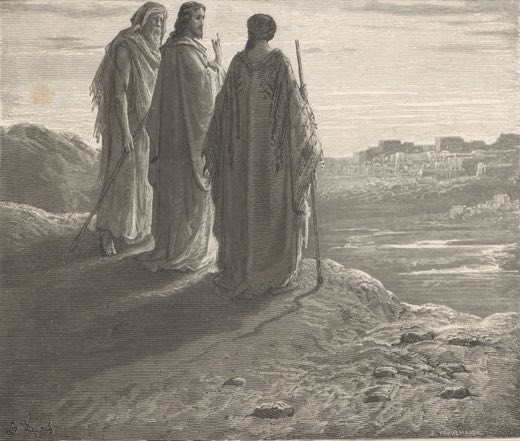 On the Road to EmmausGustave Doré
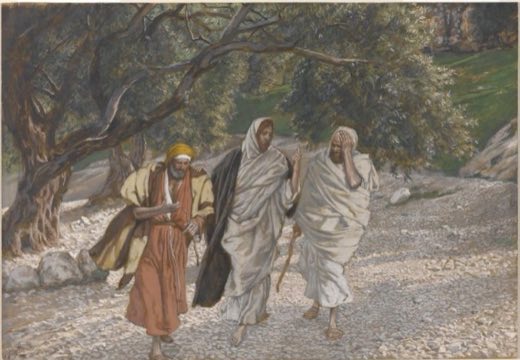 The Pilgrims of Emmaus on the Road (Les pèlerins d'Emmaüs en chemin)James Tissot
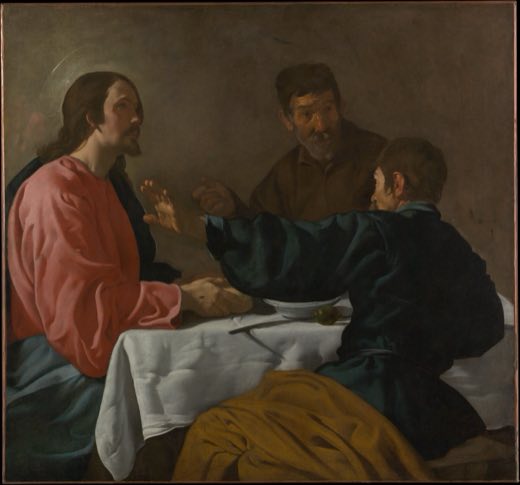 The Supper at EmmausVelázquez
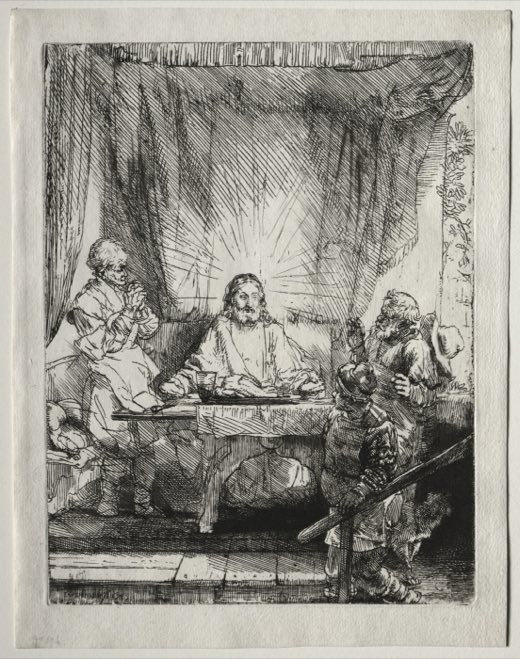 Christ at Emmaus: The Larger PlateRembrandt
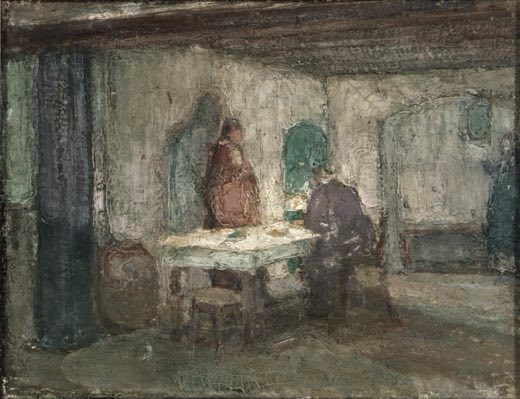 And He Disappeared out of Their SightHenry Ossawa Tanner
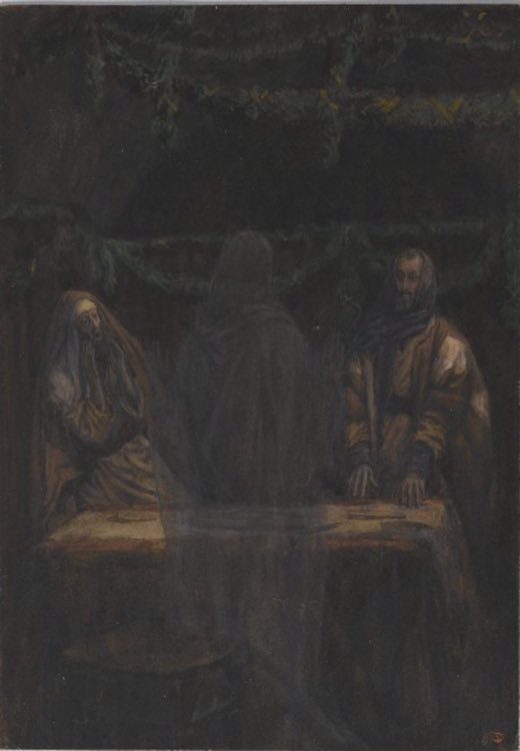 He Vanished from Their Sight (Il disparut à leurs yeux)James Tissot
See also
- Stadion and mileMoney and measures
- How a biblical place is identifiedHow the Bible’s world is studied
- The Maccabean warWeapons and warfare
- Jesus and the disciples on the roadRoads and travel
- A day’s journeyRoads and travel
- CleopasPeople
- JesusPeople
- EmmausPlaces
Scholars disagree
Sources: Tyndale Open Bible Dictionary © 2023 Tyndale House Publishers, CC BY-SA 4.0 — adapted and shortened; the original work is available for free at tyndaleopenresources.com · Sources and rights