Home › Explore › Scholars disagree › Where were Golgotha and the tomb?
Where was it?
Where were Golgotha and the tomb?
Under the Church of the Holy Sepulchre — or at the Garden Tomb outside the Damascus Gate?
John says Jesus was crucified near the city, and buried close by, in a new tomb in a garden. Two places in Jerusalem are honored as that place.
What the Bible says
To the Place of the Skull, in Aramaic GolgothaJohn 19:17
Carrying His own cross, He went out to The Place of the Skull, which in Hebrew is called Golgotha.The place was near the cityJohn 19:20
Many of the Jews read this sign, because the place where Jesus was crucified was near the city, and it was written in Hebrew, Latin, and Greek.A garden, and in it a new tombJohn 19:41–42
Now there was a garden in the place where Jesus was crucified, and in the garden a new tomb in which no one had yet been laid. And because it was the Jewish day of Preparation and the tomb was nearby, they placed Jesus there.A new rock-cut tomb, closed with a great stoneMatt 27:60
and placed it in his own new tomb that he had cut into the rock. Then he rolled a great stone across the entrance to the tomb and went away.Jesus suffered outside the city gateHeb 13:12
And so Jesus also suffered outside the city gate, to sanctify the people by His own blood.1View 1
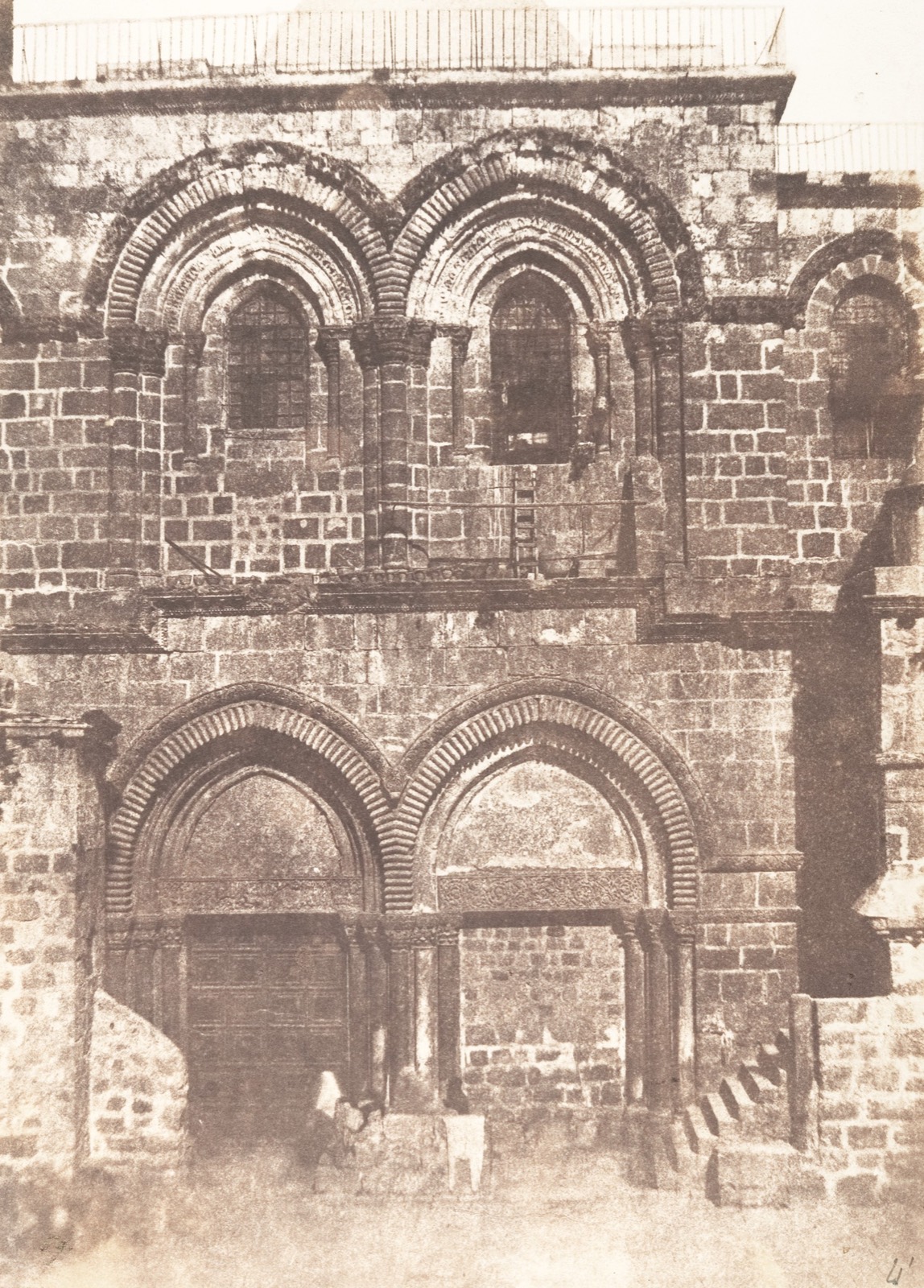
The Church of the Holy Sepulchre
Christian tradition since the 4th century, kept by the ancient churches; most archaeologists.
- Eusebius tells how Constantine’s workers, about 326, cleared away a temple built by Hadrian and found the tomb beneath it.
- Excavations show the site was an old quarry with rock-cut tombs of the 1st century — outside the city wall of Jesus’ day; a new wall, built about AD 41–44, brought it inside the city.
- Jerusalem’s Christians seem to have kept the memory of the place from the 1st century until Constantine.
2View 2
The Garden Tomb
Proposed in the 19th century; championed by General Charles Gordon (1883).
- It lies outside today’s city wall, by a rocky cliff that many see as a skull.
- Here a tomb cut in the rock stands in a garden with an ancient cistern and a winepress, much as one pictures the Gospels’ scene.
- The archaeologist Gabriel Barkay dated the tomb to the 8th–7th century BC; its keepers today welcome visitors to remember the resurrection there without insisting on the spot.
What we know for sure
Jesus was crucified outside the city gate, near the city, and laid nearby in a new tomb in a garden (John 19:20, 41; Hebrews 13:12).
Sources
- Eusebius, Life of Constantine 3.25–40
- Martin Biddle, The Tomb of Christ (1999)
- Gabriel Barkay, “The Garden Tomb: Was Jesus Buried Here?”, Biblical Archaeology Review 12:2 (1986)
- Jerome Murphy-O’Connor, The Holy Land: An Oxford Archaeological Guide (5th ed., 2008)