Encyclopedia › Weather and the forces of nature
Weather and the forces of nature
The breeze of the day
The summer sea breeze · reaches Jerusalem by early afternoon · winnowing in the evening wind
On summer days the land heats faster than the sea, and by late morning a steady breeze sets in from the west. It crosses the coastal plain, climbs the hills and reaches Jerusalem around noon or early afternoon, cooling the air until evening. In the Jordan Valley and on the Dead Sea it arrives later, sometimes as a strong gusty wind. Farmers counted on it. Grain was winnowed by tossing it into the wind, and the threshing floors were set on open, high ground where the afternoon and evening breeze would carry off the chaff. Naomi told Ruth that Boaz, her relative, “tonight … is winnowing barley on the threshing floor” (Ruth 3:2).
Many readers think of this breeze in the story of the garden. After the man and woman ate from the tree, they “heard the voice of the LORD God walking in the garden in the breeze of the day, and they hid themselves” (Genesis 3:8); the Hebrew is literally “at the wind of the day”, and most commentators take it as the cool, breezy part of the afternoon. The same wind blows in Ecclesiastes, which watches it go south and turn north, “round and round it swirls, ever returning on its course” (Ecclesiastes 1:6).
In art
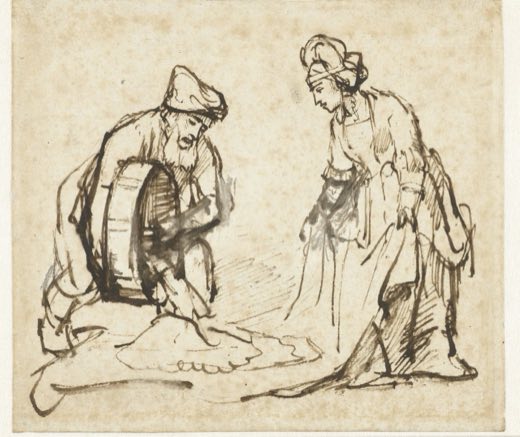 Boaz and Ruth
See also
- Threshing floors and winnowingWork and trades
- Clouds and the four windsWeather and the forces of nature
- Morning, noon and evening: the parts of the dayHuman life in Bible times
- The heat of the day and shadeWeather and the forces of nature
Sources: Tyndale Open Bible Dictionary © 2023 Tyndale House Publishers, CC BY-SA 4.0 — adapted and shortened; the original work is available for free at tyndaleopenresources.com · Sources and rights