Encyclopedia › Weather and the forces of nature
Weather and the forces of nature
Dew
Hebrew tal · summer nights on the coastal plain and the western slopes · moisture without rain
Dew, Hebrew tal, mattered more in Israel than in rainy lands. In the dry months moist air from the Mediterranean cools during the night and leaves drops on leaves and ground, most of all on the coastal plain and the western slopes of the hills; vines, melons and other summer crops got moisture from it when no rain fell. So dew and rain are named together as the life of the land. Isaac blesses Jacob with “the dew of heaven and the richness of the earth” (Genesis 27:28); Elijah tells Ahab that there will be “neither dew nor rain in these years except at my word” (1 Kings 17:1); Haggai says that “the heavens have withheld their dew” (Haggai 1:10).
Asking God for a sign, Gideon laid a fleece on a threshing floor; in the morning the fleece alone was wet, and “he squeezed the fleece and wrung out the dew—a bowlful of water” (Judges 6:38). A psalm compares the unity of brothers to “the dew of Hermon falling on the mountains of Zion” (Psalm 133:3); the high mountain in the north is known for its heavy dew. And because dew is gone soon after sunrise, Hosea uses it for what does not last: “like the early dew that vanishes” (Hosea 6:4).
In art
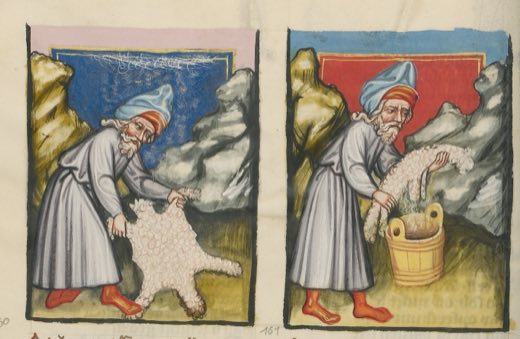 Gideon and the Miraculous Dryness of the Fleece; Gideon and the Dew on the Fleece (Ms. 33, fol. 130v, from the Weltchronik)
All verses on this topic
See also
- The early and the latter rainWeather and the forces of nature
- Manna and quailThe desert
- Mist, haze and morning cloudsWeather and the forces of nature
- HermonPlaces
Sources: Tyndale Open Bible Dictionary © 2023 Tyndale House Publishers, CC BY-SA 4.0 — adapted and shortened; the original work is available for free at tyndaleopenresources.com · Sources and rights