Encyclopedia › Weapons and warfare
Weapons and warfare
Gibeon: a treaty and a battle
Joshua 9–10 · moldy bread and mended wineskins · five Amorite kings · the pass of Beth-horon
The people of Gibeon, a town a few miles north of Jerusalem, heard what had happened to Jericho and Ai and came to Joshua’s camp at Gilgal as if from far away, with worn-out sacks, “old wineskins, cracked and mended”, patched sandals and bread “dry and moldy” (Joshua 9:4–5). The leaders of Israel “sampled their provisions, but did not seek the counsel of the LORD” (Joshua 9:14) and swore a treaty of peace. Three days later they learned that Gibeon was close by. The oath was kept: the Gibeonites lived, and became “woodcutters and water carriers” for the congregation and the altar (Joshua 9:27). When Saul later tried to destroy them, it was remembered as a breach of that oath (2 Samuel 21:2).
Five Amorite kings — of Jerusalem, Hebron, Jarmuth, Lachish and Eglon — then besieged Gibeon, which sent word: “Come quickly and save us!” (Joshua 10:6). “After marching all night from Gilgal, Joshua caught them by surprise” (Joshua 10:9) — a climb of about a thousand metres from the Jordan valley — and Israel pursued the enemy down the pass of Beth-horon, where hailstones fell on them, as far as Azekah and Makkedah. Joshua’s prayer that the sun stand still belongs to this day. Gibeon is el-Jib, where excavations found a great round pool cut into the rock and jar handles inscribed with the town’s name.
In art
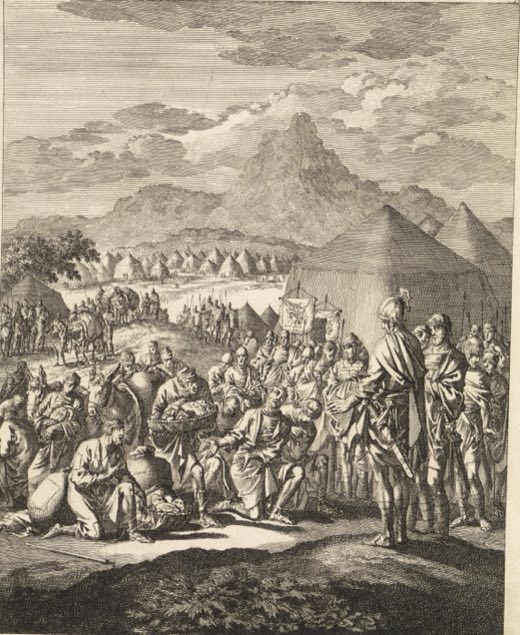 The Gibeonites Deceive JoshuaJan Luyken
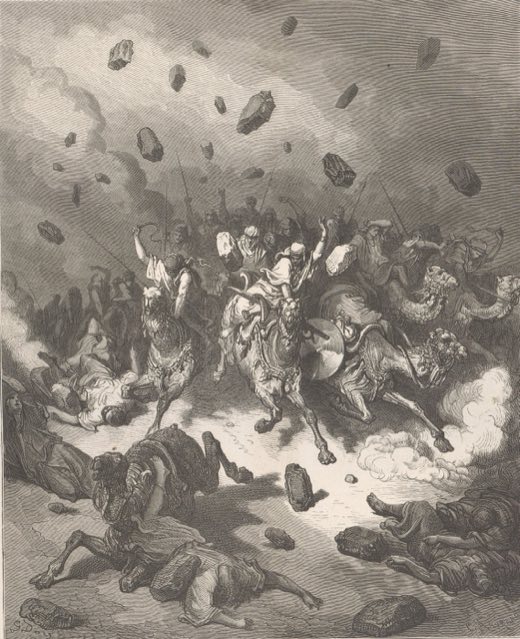 The Hailstones on the AmoritesGustave Doré
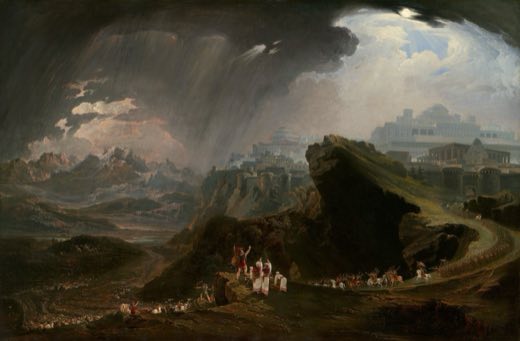 Joshua Commanding the Sun to Stand Still upon GibeonJohn Martin
See also
- The sun stands still at GibeonThe sky of the Bible
- What travelers carriedRoads and travel
- Snow, frost and hailWeather and the forces of nature
- Pools and water tunnelsBuildings and structures
- Roads through the hills and the Jericho roadRoads and travel
- Temple servants and the descendants of Solomon’s servantsJewish groups and the Roman world
- The seven nations: Hivites, Perizzites, Girgashites and othersPeoples and gods around Israel
- Joshua, son of NunPeople
- GibeonPlaces
- GilgalPlaces
- Beth-horonPlaces
- AzekahPlaces
Sources: Tyndale Open Bible Dictionary © 2023 Tyndale House Publishers, CC BY-SA 4.0 — adapted and shortened; the original work is available for free at tyndaleopenresources.com · Sources and rights