Encyclopedia › Weather and the forces of nature
Weather and the forces of nature
The plagues of Egypt and the land of Egypt
Ten signs in Exodus 7–12 · the Nile, frogs, hail, locusts, darkness · natural chains proposed and doubted
Exodus tells of ten blows on Egypt, each announced by Moses: the Nile turned to blood so that “the fish in the Nile died, and the river smelled so bad that the Egyptians could not drink its water” (Exodus 7:21); frogs, gnats, flies; disease on the livestock; boils; hail with lightning, “so severe that nothing like it had ever been seen in all the land of Egypt” (Exodus 9:24); locusts brought by the east wind and carried off by “a very strong west wind” (Exodus 10:13, 19); “total darkness” for three days (Exodus 10:22); and the death of the firstborn. The text presents them as signs of the LORD’s power — “I will execute judgment against all the gods of Egypt” (Exodus 12:12) — and the Psalms retell them in their own order (Psalms 78 and 105).
Many readers have noticed how closely the first nine follow the land of Egypt. In 1957 the scholar Greta Hort proposed a chain of natural events beginning with an unusually high Nile, red with soil and algae, which drove out the frogs and bred insects and disease; others have linked the darkness with a khamsin dust storm or with ash from the eruption of Thera. Critics answer that the chain fits only loosely, that the dates do not match, that it leaves out the death of the firstborn, and that the story is built as a sequence of signs, not a weather report. Others see in the plagues a contest with Egypt’s gods of the Nile, the sun and the land.
In art
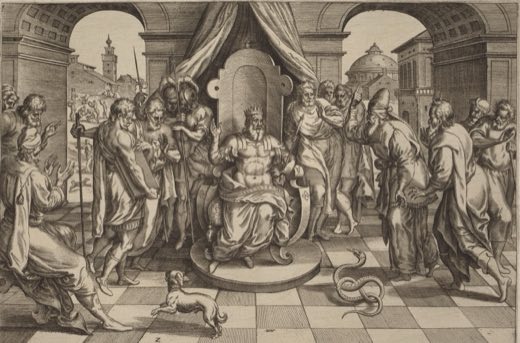 Moses and Aaron before the PharaohJohan Wierix
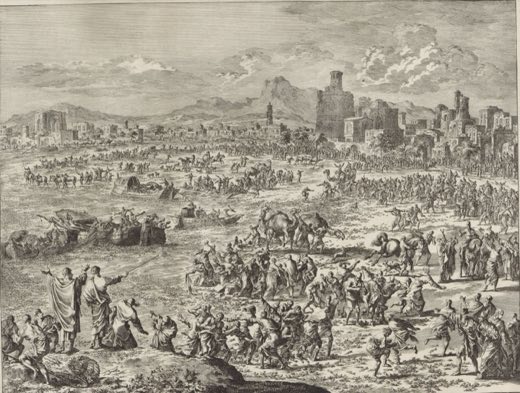 The Plague of FrogsJan Luyken
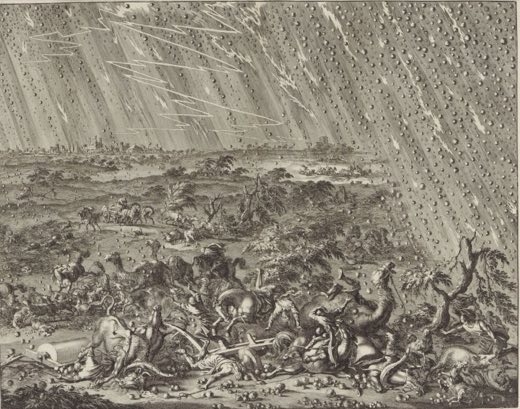 The Plague of HailJan Luyken
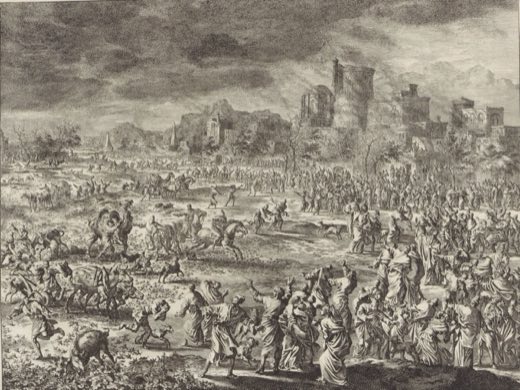 The Plague of LocustsJan Luyken
See also
- The Nile: the river that made EgyptThe land of the Bible
- FrogAnimals of the Bible
- Locust plagues in historyWeather and the forces of nature
- The east wind: sirocco and khamsinWeather and the forces of nature
- Snow, frost and hailWeather and the forces of nature
- The pharaoh of the Exodus: who was he?Rulers around the Bible
- MosesPeople
- EgyptPlaces
Sources: Tyndale Open Bible Dictionary © 2023 Tyndale House Publishers, CC BY-SA 4.0 — adapted and shortened; the original work is available for free at tyndaleopenresources.com · Sources and rights