Encyclopedia › Weapons and warfare
Weapons and warfare
The fall of Jericho
Joshua 6 · six days around the walls, seven times on the seventh · Rahab spared
After crossing the Jordan, Israel camped at Gilgal, and Jericho, the first city west of the river, “was tightly shut up because of the Israelites. No one went out and no one came in” (Joshua 6:1). There was no siege and no assault. For six days the army marched once around the walls, with seven priests blowing rams’ horns before the ark; on the seventh day they went around seven times. “So when the rams’ horns sounded, the people shouted … and the wall collapsed” (Joshua 6:20).
The city was devoted to the LORD: no one was to take plunder, and its silver, gold, bronze and iron went into His treasury. Rahab, who had hidden the spies, was spared with her father’s household, and “she has lived among the Israelites to this day” (Joshua 6:25). Joshua laid a curse on anyone who would rebuild Jericho, and Kings tells that in Ahab’s days Hiel of Bethel rebuilt it at the cost of his firstborn and his youngest son (1 Kings 16:34).
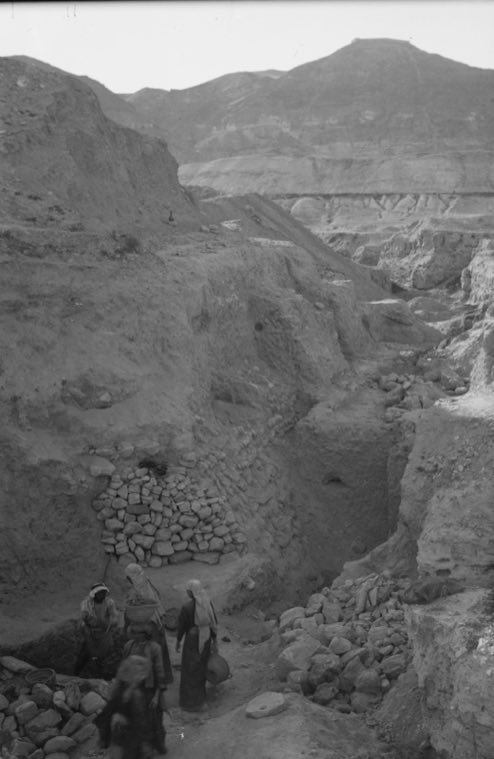
The ruins of old Jericho, Tell es-Sultan, have been dug again and again. John Garstang, in the 1930s, dated a fallen city wall to about 1400 BC; Kathleen Kenyon, in the 1950s, dated that destruction to about 1550 BC and found little from the 13th century, when many place Joshua. Some answer that erosion removed the later town or that the conquest was earlier; others read the story differently. The question is still debated.
In art
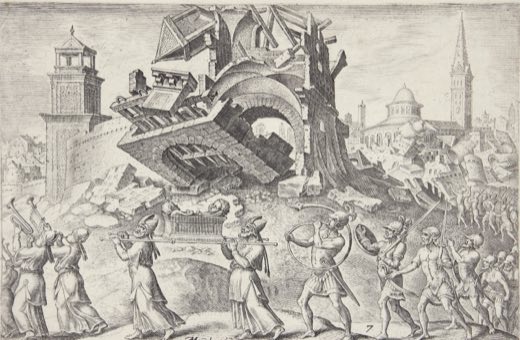 The Destruction of Jericho
See also
- Jericho: the oasis and its palacesCities of the Bible
- Ram’s horn and trumpetsMusic and instruments
- Spies and scoutsWeapons and warfare
- The ban: things devoted to destructionWeapons and warfare
- Ai: a defeat and an ambushWeapons and warfare
- Tells: hills of ruined townsBuildings and structures
- Houses in the wall: casemate wallsBuildings and structures
- Biblical archaeology and its debatesHow the Bible’s world is studied
- The Valley of Achor: from trouble to hopeThe land of the Bible
- Joshua, son of NunPeople
- RahabPeople
- JerichoPlaces
- GilgalPlaces
Scholars disagree
Sources: Tyndale Open Bible Dictionary © 2023 Tyndale House Publishers, CC BY-SA 4.0 — adapted and shortened; the original work is available for free at tyndaleopenresources.com · Sources and rights