Encyclopedia › Weapons and warfare
Weapons and warfare
The ban: things devoted to destruction
Hebrew cherem, “devoted” · Jericho and Achan · Saul and Agag · the same word on Mesha’s stone
The Hebrew cherem means something set apart for God and taken out of human use for good. In the Law it could be a field or an animal given to the sanctuary: “everything so devoted is most holy to the LORD” and could not be sold or bought back (Leviticus 27:28); such things belonged to the priests (Numbers 18:14). In war it meant that a city and its goods were given over entirely, so that no one could take plunder from them. At Jericho the silver and gold went into the LORD’s treasury, and Achan’s theft of devoted things is told as the reason for the defeat at Ai.
Israel’s neighbors used the same word: Mesha, king of Moab, says on his stone that he took Nebo from Israel and devoted it to his god Ashtar-Chemosh. When Saul fought the Amalekites, he spared King Agag and “the best of the sheep and cattle” (1 Samuel 15:9), and Samuel answered, “obedience is better than sacrifice” (1 Samuel 15:22). Jewish and Christian readers have read and discussed these chapters since ancient times. Many note that the same books tell of Rahab’s family and the Gibeonites spared, and of Canaanites who went on living in the land (Judges 1:21); scholars also compare the sweeping words of victory in other ancient war reports, where “all” and “none left” are common.
In art
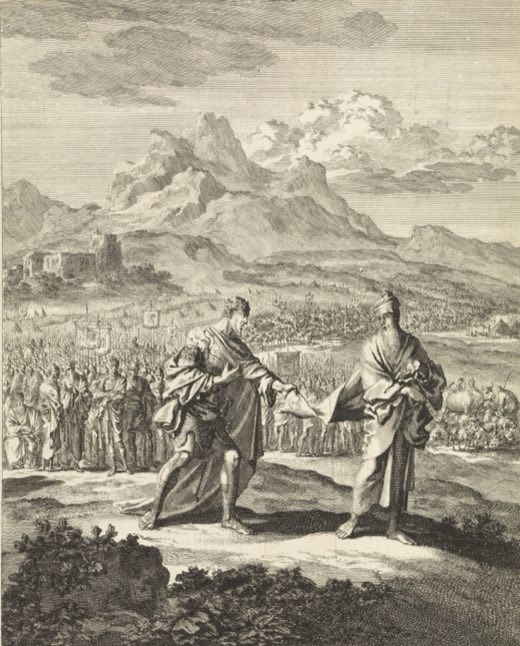 Saul Tears Samuel’s Robe
See also
- Moabite Stone (Mesha Stele)The Bible in stone
- The fall of JerichoWeapons and warfare
- Ai: a defeat and an ambushWeapons and warfare
- Chemosh and MilcomPeoples and gods around Israel
- AmalekitesPeoples and gods around Israel
- AchanPeople
- SaulPeople
- Agag (1 Samuel)People
Sources: Tyndale Open Bible Dictionary © 2023 Tyndale House Publishers, CC BY-SA 4.0 — adapted and shortened; the original work is available for free at tyndaleopenresources.com · Sources and rights