Encyclopedia › Buildings and structures
Buildings and structures
Houses in the wall: casemate walls
Two walls joined by cross walls · rooms inside the wall · Rahab’s window · Paul’s basket
Many towns of the Iron Age were ringed not by one thick wall but by two thinner ones, a few meters apart, joined at intervals by cross walls. The narrow rooms between them are called casemates. In peacetime they served as storerooms or as the back rooms of houses built against the wall; when an enemy came, they could be filled with earth and stones to make a solid barrier. Casemate walls have been excavated at Hazor, Gezer, Khirbet Qeiyafa above the Valley of Elah, Tell Beit Mirsim and many other sites, and Herod later built a casemate wall around the top of Masada, where rebels lived in its rooms during the war with Rome.
Such walls explain some of the Bible’s escapes. In Jericho, Rahab let the two spies “down by a rope through the window, since the house where she lived was built into the wall of the city” (Joshua 2:15). At Damascus, when the governor under King Aretas guarded the city to arrest him, Paul tells, “I was lowered in a basket through a window in the wall and escaped his grasp” (2 Corinthians 11:33); Luke says his disciples did it “one night” (Acts 9:25). Michal used the same way out from a house: she “lowered David from the window, and he ran away and escaped” (1 Samuel 19:12).
In art
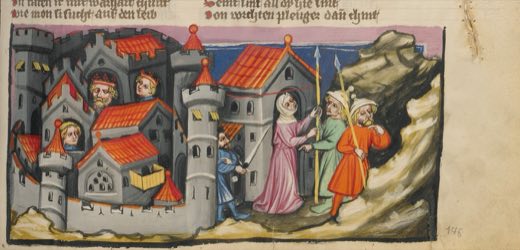 Rahab Hiding the Spies in Jericho (Ms. 33, fol. 114, from the Weltchronik)Unknown painter, Regensburg
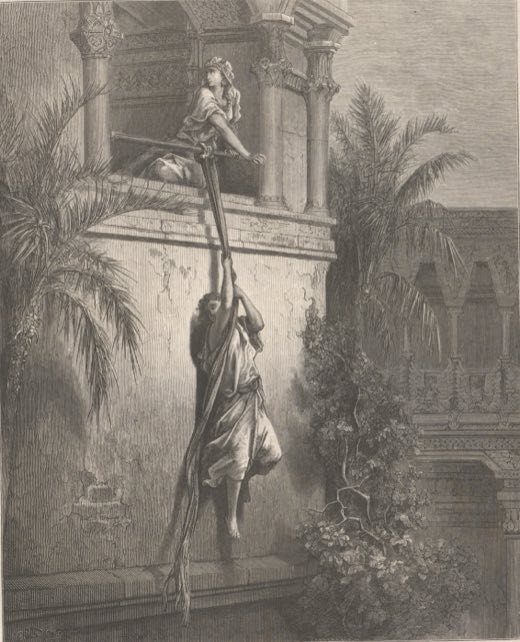 Michal Lets David EscapeGustave Doré
See also
- City walls and siegesWeapons and warfare
- Spies and scoutsWeapons and warfare
- The fall of JerichoWeapons and warfare
- MasadaWeapons and warfare
- Rooms, windows and stairsBuildings and structures
- Hazor, Megiddo and Gezer: Solomon’s building works?Buildings and structures
- RahabPeople
- PaulPeople
- AretasPeople
- DamascusPlaces
- JerichoPlaces
Sources: Tyndale Open Bible Dictionary © 2023 Tyndale House Publishers, CC BY-SA 4.0 — adapted and shortened; the original work is available for free at tyndaleopenresources.com · Sources and rights