Encyclopedia › The sky of the Bible
The sky of the Bible
The sun stands still at Gibeon
Joshua 10:12–14 · quoted from the Book of Jashar · “no day like it before or since”
When five Amorite kings marched against Gibeon, which had made peace with Israel, Joshua came up from Gilgal by night and fell on them. As the enemy fled down the pass of Beth-horon, he spoke to the LORD before all Israel: “O sun, stand still over Gibeon, O moon, over the Valley of Aijalon” (Joshua 10:12). “So the sun stood still and the moon stopped until the nation took vengeance upon its enemies.” The verses are poetry, and the book says where they come from: “Is this not written in the Book of Jashar?” — an old book of songs, now lost, that is quoted once more in David’s lament for Saul and Jonathan (2 Samuel 1:18). Joshua adds: “There has been no day like it before or since, when the LORD listened to the voice of a man” (Joshua 10:14).
Readers have understood the day in different ways. Many take it as the text tells it: the day was lengthened by a wonder of God. Others, noting that the Hebrew verb can also mean “be silent” or “be still”, think of a dimming of the sun’s heat by storm clouds — the same battle brought “large hailstones” (Joshua 10:11) — or of light lasting long enough for the pursuit. The prophet Habakkuk remembers the scene in his song: “Sun and moon stood still in their places at the flash of Your flying arrows” (Habakkuk 3:11).
In art
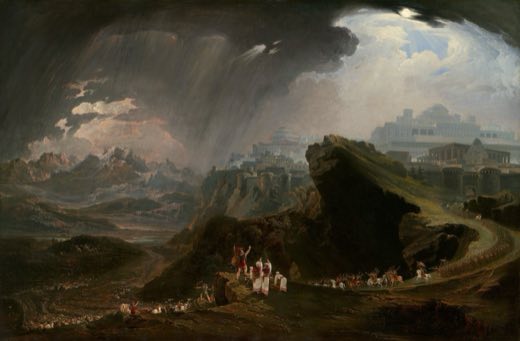 Joshua Commanding the Sun to Stand Still upon GibeonJohn Martin
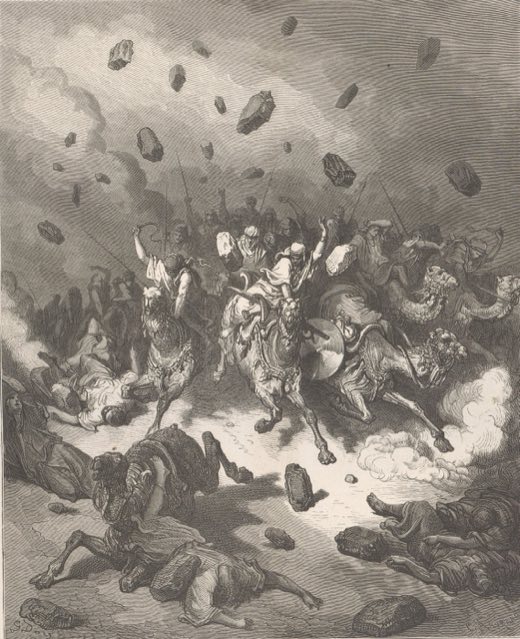 The Hailstones on the AmoritesGustave Doré
See also
- The shadow on the stairway of AhazThe sky of the Bible
- Books the Bible quotes but we do not haveHow the Bible came to be
- Gibeon: a treaty and a battleWeapons and warfare
- GibeonPlaces
Sources: Tyndale Open Bible Dictionary © 2023 Tyndale House Publishers, CC BY-SA 4.0 — adapted and shortened; the original work is available for free at tyndaleopenresources.com · Sources and rights