Encyclopedia › Weapons and warfare
Weapons and warfare
Deborah and Barak at the Kishon
Judges 4–5 · Jabin of Hazor and his commander Sisera · 900 iron chariots · Mount Tabor
Jabin, “king of Canaan, who reigned in Hazor”, had “nine hundred chariots of iron” and oppressed Israel for twenty years (Judges 4:2–3). The prophetess Deborah, who judged Israel under a palm tree between Ramah and Bethel, summoned Barak of Kedesh in Naphtali and told him to gather ten thousand men of Naphtali and Zebulun on Mount Tabor, while the LORD would draw Sisera, Jabin’s commander, out to the River Kishon. Barak would not go without her. “I will certainly go with you,” she answered, but the honor would not be his: the LORD would sell Sisera “into the hand of a woman” (Judges 4:9).
When the chariots gathered in the plain, Deborah said, “Has not the LORD gone before you?” (Judges 4:14), and Barak came down from Tabor. Sisera’s army was routed, and Sisera “abandoned his chariot and fled on foot” (Judges 4:15) to the tent of Jael, the wife of Heber the Kenite, who killed him as he slept. The Song of Deborah in the next chapter, which many scholars count among the oldest poems in the Bible, tells the battle as a storm: “From the heavens the stars fought”, and “the River Kishon swept them away” (Judges 5:20–21). After rain the clay of the plain turns to mud, where chariots are of little use. The song also names the tribes that came to fight and those that stayed at home.
In art
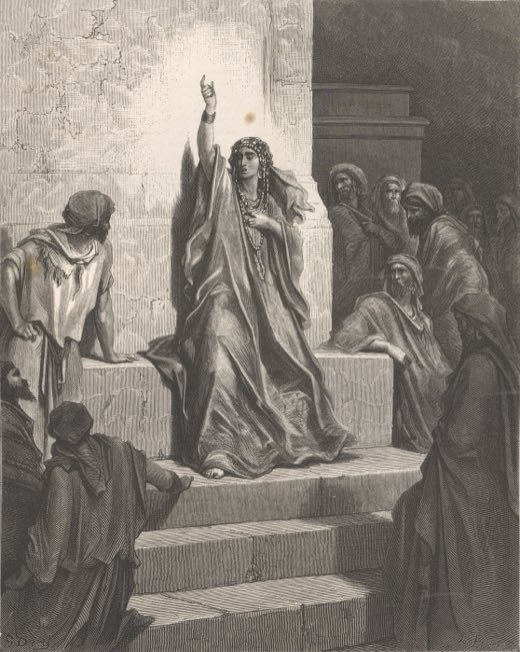 Deborah's Song of Praise
See also
- The Kishon: the river of the great plainThe land of the Bible
- Chariots and horsesWeapons and warfare
- Mount Tabor: the dome above the plainThe land of the Bible
- Hazor: the head of the kingdomsCities of the Bible
- Songs of victoryMusic and instruments
- KenitesPeoples and gods around Israel
- Deborah (Judges)People
- BarakPeople
- Sisera (Judges)People
- JaelPeople
- Jabin (Judges)People
- KishonPlaces
- Mount TaborPlaces
- HazorPlaces
Sources: Tyndale Open Bible Dictionary © 2023 Tyndale House Publishers, CC BY-SA 4.0 — adapted and shortened; the original work is available for free at tyndaleopenresources.com · Sources and rights