Encyclopedia › Trade, craft and color
Trade, craft and color
The cargoes of Babylon: Revelation 18
Twenty-nine kinds of cargo · gold to “souls of men” · Rome’s luxury trade
When Revelation describes the fall of the great city it calls Babylon, the merchants and sailors stand far off and weep, “because there is no one left to buy their cargo” (Revelation 18:11). Then comes a list of twenty-nine kinds of goods, the longest list of trade in the New Testament: “gold, silver, precious stones, and pearls; of fine linen, purple, silk, and scarlet; of all kinds of citron wood and every article of ivory, precious wood, bronze, iron, and marble; of cinnamon, spice, incense, myrrh, and frankincense; of wine, olive oil, fine flour, and wheat; of cattle, sheep, horses, and chariots; of slaves and souls of men” (Revelation 18:12–13).
Most readers since the early church have seen first-century Rome behind “Babylon”, and every item fits what Rome imported. Silk came overland from China, pearls and cinnamon by sea from India and the Gulf, ivory from Africa, citron-wood tables from North Africa fetched fortunes, and Egypt and North Africa shipped the wheat that fed the city. Pliny the Elder complained that India, China and Arabia drained a hundred million sesterces a year from the empire for luxuries. The list follows Ezekiel’s lament over Tyre, which also counts that city’s trading partners and wares (Ezekiel 27), and it ends with the shipmasters who cry, “in a single hour such fabulous wealth has been destroyed!” (Revelation 18:17).
In art
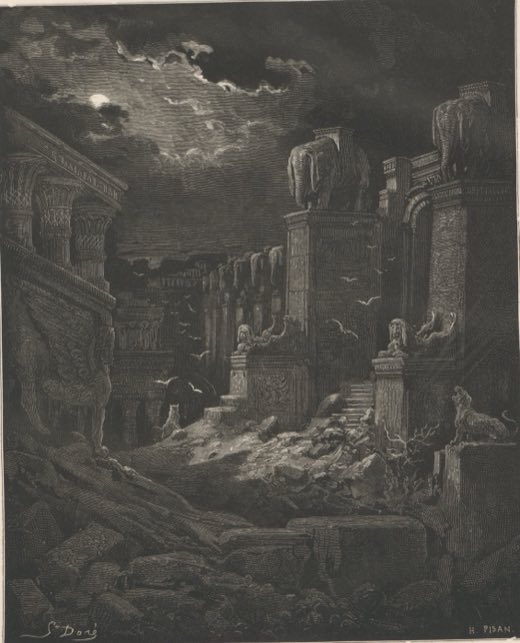 Babylon FallenGustave Doré
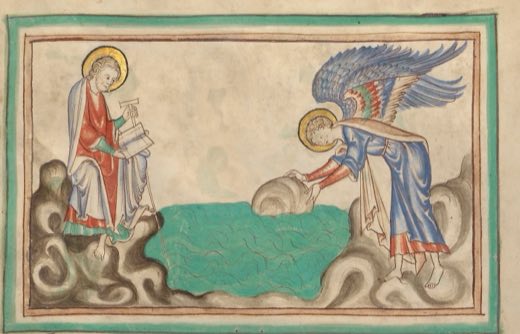 An Angel Casting a Millstone into the Sea (Ms. Ludwig III 1, fol. 38, from the Getty Apocalypse)Unknown English painter
See also
- The market of nations: Tyre’s trade in Ezekiel 27Trade, craft and color
- Spices from India and the monsoon shipsTrade, craft and color
- Citron woodPlants of the Bible
- PearlPrecious stones and metals
- The sea in RevelationThe sea
- Trading in peopleTrade, craft and color
- Merchant ships and grain shipsThe sea
Sources: Tyndale Open Bible Dictionary © 2023 Tyndale House Publishers, CC BY-SA 4.0 — adapted and shortened; the original work is available for free at tyndaleopenresources.com · Sources and rights