Encyclopedia › Plants of the Bible
Plants of the Bible
Citron wood
Greek xylon thyinon · KJV “thyine wood” · Tetraclinis articulata, the sandarac tree
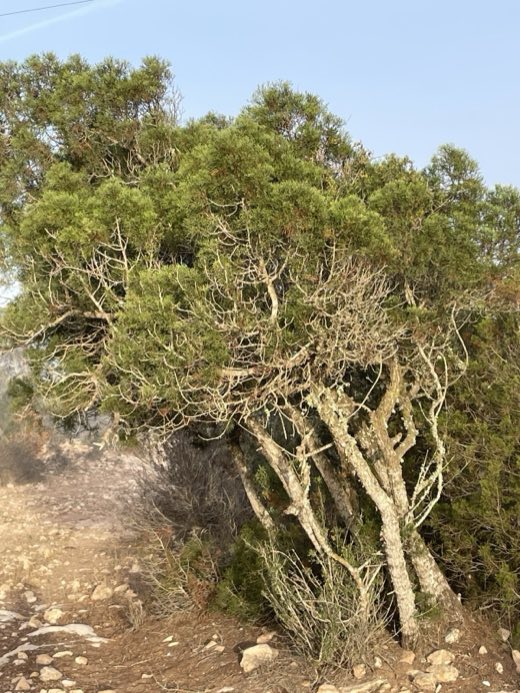
In Revelation 18 the merchants mourn the cargoes no one will buy any longer, among them “all kinds of citron wood” (Revelation 18:12). This is not the citrus fruit tree but thyine wood, from the sandarac tree, a small conifer of the cypress family that grows in the dry hills of North Africa, especially Morocco and Algeria. Its wood is hard, dark, fragrant and slow to decay, and insects leave it alone. Its resin, sandarac, was used for varnish.
The Romans prized it above almost every other wood. The most valued pieces came from the knotted burls near the root, whose patterned grain was cut into slices for round tabletops, and Roman writers tell of single citrus-wood tables that cost as much as a large estate. Pliny the Elder describes a craze for such tables among the rich. That is why it stands in Revelation’s list between silk, scarlet and ivory — the goods of a wealthy city’s trade. Older English Bibles keep the Greek name, “thyine wood”.
In nature
All verses with this plant (1)
Where the Hebrew, Aramaic or Greek word for it stands in the text.
Revelation1
cargo of gold, silver, precious stones, and pearls; of fine linen, purple, silk, and scarlet; of all kinds of citron wood and every article of ivory, precious wood, bronze, iron, and marble;See also
- EbonyPlants of the Bible
- Cinnamon and cassiaPlants of the Bible
- The cargoes of Babylon: Revelation 18Trade, craft and color
Sources: Tyndale Open Bible Dictionary © 2023 Tyndale House Publishers, CC BY-SA 4.0 — adapted and shortened; the original work is available for free at tyndaleopenresources.com · Plants and Trees in the Bible © United Bible Societies 2025, adapted from R. Koops, Each According to its Kind © 2012 UBS, CC BY-SA 4.0 · Sources and rights