Encyclopedia › Trade, craft and color
Trade, craft and color
Buying grain in hard years
Joseph’s storehouses · fields mortgaged for grain · “a quart of wheat for a denarius”
In good years most families grew their own grain; in bad years they had to buy it, and whoever held stores held power. When famine struck Canaan, the sons of Israel “were among those who came to buy grain” in Egypt (Genesis 42:5). Genesis tells that Joseph collected all the money in Egypt and Canaan for grain, then took the Egyptians’ livestock, and at last the people said, “Purchase us and our land in exchange for food” (Genesis 47:14, 19). In Nehemiah’s day poor families cried, “We are mortgaging our fields, our vineyards, and our homes to get grain during the famine” (Nehemiah 5:3). Proverbs knows the merchant who waits for prices to rise: “The people will curse the hoarder of grain, but blessing will crown the one who sells it” (Proverbs 11:26).
Prices tell the story of a crisis. During the siege of Samaria a donkey’s head sold for eighty shekels, and Elisha promised a seah of fine flour “for a shekel” the next day (2 Kings 7:1). In Revelation a voice calls out “A quart of wheat for a denarius” (Revelation 6:6) — a day’s wage for a day’s bread. Cities without farmland lived on bought grain: Tyre and Sidon begged Herod Agrippa for peace “because their region depended on the king’s country for food” (Acts 12:20), and Rome ate wheat shipped from Egypt in great grain ships like the one Paul sailed on.
In art
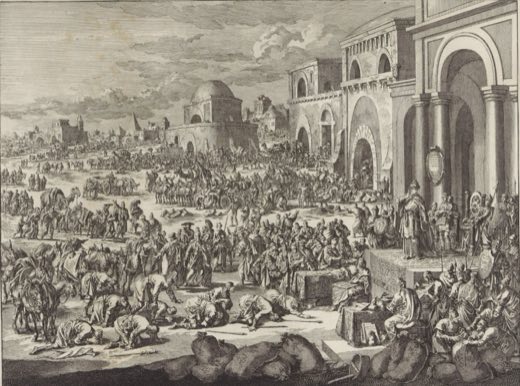 Joseph Sells Grain to His Brothers
See also
- Famines in historyWeather and the forces of nature
- Wheat, oil and balm: what the land soldTrade, craft and color
- What things cost: prices and wagesMoney and measures
- Merchant ships and grain shipsThe sea
- Loans, pledges and interestTrade, craft and color
- Seah, omer and kabMoney and measures
- JosephPeople
Sources: Tyndale Open Bible Dictionary © 2023 Tyndale House Publishers, CC BY-SA 4.0 — adapted and shortened; the original work is available for free at tyndaleopenresources.com · Sources and rights