Encyclopedia › Trade, craft and color
Trade, craft and color
Trading in people
Joseph sold for twenty shekels · whole towns sold to Edom · “slaves and souls of men”
People were among the goods that moved along the caravan roads. Joseph’s brothers pulled him out of the pit and “sold him for twenty shekels of silver to the Ishmaelites, who took him to Egypt” (Genesis 37:28), where he was sold again to Potiphar. Most slaves of the ancient world were captives of war, and traders followed the armies to buy them. The prophets condemn the cities that did it on a large scale: Gaza “exiled a whole population, delivering them up to Edom”, and Tyre did the same and “broke a covenant of brotherhood” (Amos 1:6, 9). Joel accuses Tyre and Sidon: “You sold the people of Judah and Jerusalem to the Greeks” (Joel 3:6). In Ezekiel’s list of Tyre’s trade, Javan, Tubal and Meshech “exchanged slaves and bronze utensils” for its goods (Ezekiel 27:13).
The Law punished kidnapping a man to sell him with death (Exodus 21:16). After the exile Nehemiah found that Jews were selling their own poor brothers, whom others had bought back from foreigners (Nehemiah 5:8). In the Roman world the trade was enormous; the geographer Strabo says that the market on the island of Delos could take in and send off tens of thousands of slaves in a day. Paul’s list of the lawless includes “slave traders” (1 Timothy 1:10), and the cargo list of fallen Babylon in Revelation ends with “slaves and souls of men” (Revelation 18:13).
In art
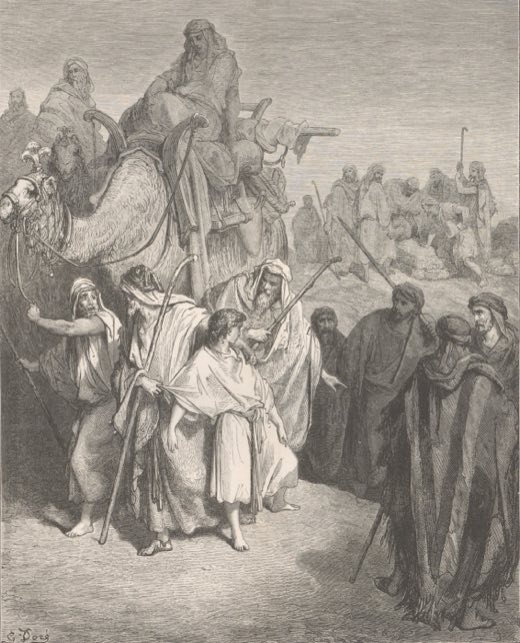 Joseph Sold by His Brothers
See also
- The market of nations: Tyre’s trade in Ezekiel 27Trade, craft and color
- Merchants and peddlersTrade, craft and color
- Slaves in the Roman worldJewish groups and the Roman world
- Slaves in the Law of MosesHuman life in Bible times
- Captives and spoilWeapons and warfare
- The cargoes of Babylon: Revelation 18Trade, craft and color
- JosephPeople
- GazaPlaces
- TyrePlaces
Sources: Tyndale Open Bible Dictionary © 2023 Tyndale House Publishers, CC BY-SA 4.0 — adapted and shortened; the original work is available for free at tyndaleopenresources.com · Sources and rights