Encyclopedia › Plants of the Bible
Plants of the Bible
Carob
Greek keration (pod) · KJV “husks” · Ceratonia siliqua · “the pods the pigs were eating”
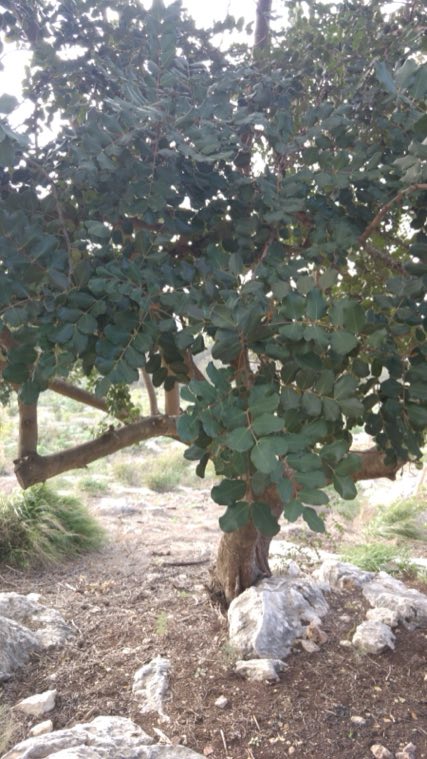
The carob is a sturdy evergreen tree of the pea family, up to about ten meters tall, with a dense round crown of glossy dark leaves and low branches. It is common across the Mediterranean, and in Israel on the coastal plain, in the foothills and on the slopes of Galilee and Samaria. Its fruit is a long, leathery brown pod full of sweet, sticky pulp and hard seeds. The seeds are so even in weight that they were once used to weigh gems and gold — the word “carat” comes from the Greek keration, “little horn”, the name of the pod.
Carob pods were cheap food for animals — cattle, horses and pigs — and in hard times for the poor. Most scholars think they were the “pods the pigs were eating” that the hungry younger son in Jesus’ parable longed to eat (Luke 15:16). The tree is also called “St. John’s bread”, from a later tradition that John the Baptist ate carob pods in the wilderness, and the pods are still sold as a sweet and made into syrup.
In nature
All verses with this plant (1)
Where the Hebrew, Aramaic or Greek word for it stands in the text.
Luke1
He longed to fill his belly with the pods the pigs were eating, but no one would give him a thing.All verses on this topic
See also
Sources: Tyndale Open Bible Dictionary © 2023 Tyndale House Publishers, CC BY-SA 4.0 — adapted and shortened; the original work is available for free at tyndaleopenresources.com · Plants and Trees in the Bible © United Bible Societies 2025, adapted from R. Koops, Each According to its Kind © 2012 UBS, CC BY-SA 4.0 · Sources and rights